
How to Identify Search Intent in Google SERPs (Why Most Pages Fail to Rank)
Struggling to figure out what Google actually wants for a keyword?
You write content… optimize everything… but still don’t rank.
The reason? You’re targeting the wrong search intent.
This guide shows you how to decode search intent directly from Google SERPs — so you create content that actually ranks.
Google doesn’t rank keywords — it ranks content that matches intent.
👉 Quick takeaway: If your content format doesn’t match the top results, it won’t rank — no matter how good it is.
Author: Hassan – SEO Researcher · Updated April 2026
This guide is part of our SERP Competition Analysis Guide where we break down how Google ranks content step-by-step.
What Search Intent Means in SEO
Search intent describes the purpose behind a search query.
When users type something into Google, they are trying to accomplish a task or find information.
Search engines attempt to understand this intent and deliver results that best satisfy the user’s goal.
For example, someone searching for:
what is keyword research
is likely looking for educational information.
However, someone searching for:
best keyword research tools
is likely comparing software products before making a decision.
Although both queries relate to the same topic, the user intent is very different.
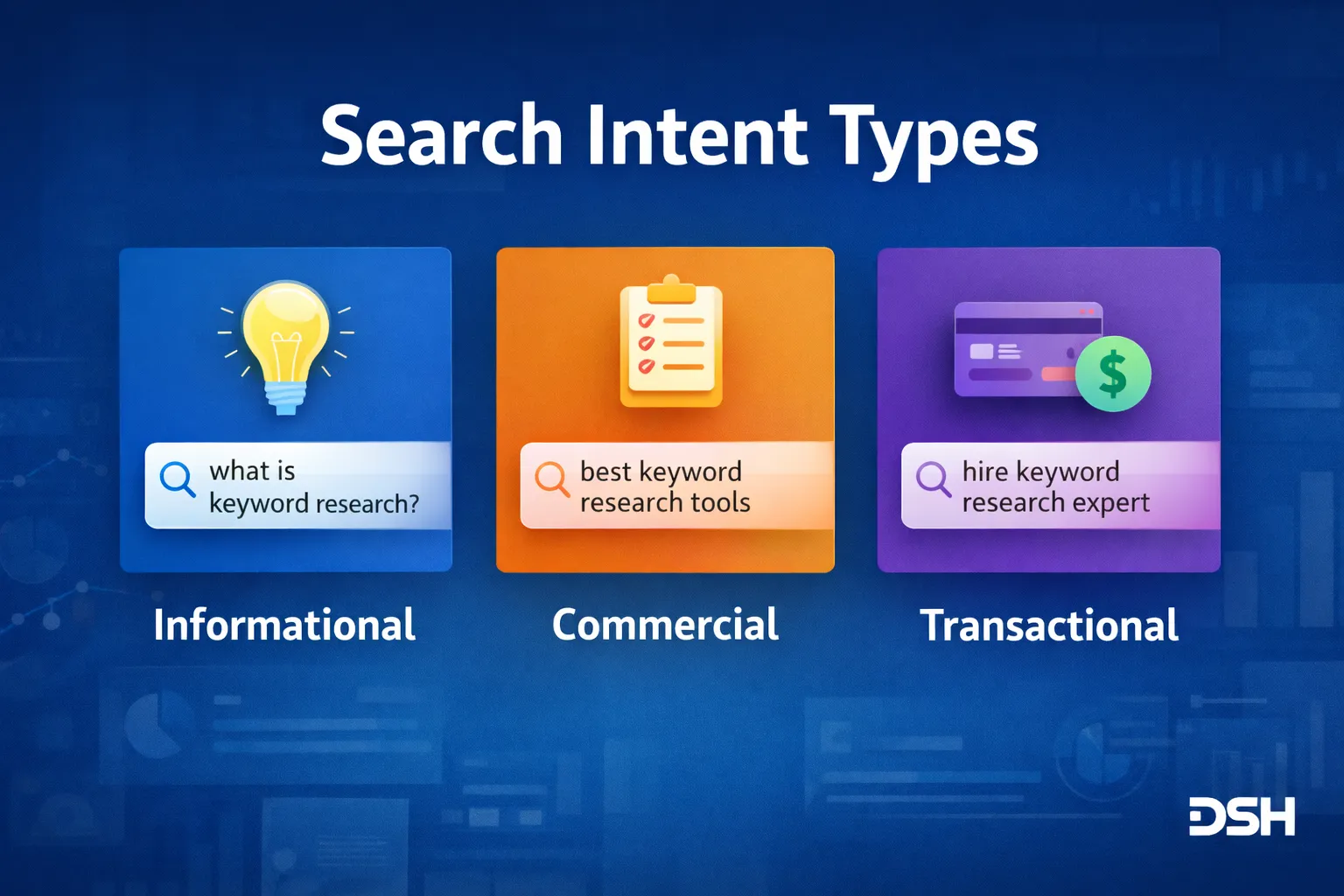
Modern SEO focuses on satisfying search intent rather than simply matching keywords.
Google’s algorithms analyze billions of searches to determine which type of content satisfies each query.
Understanding this intent allows you to create content that aligns with what users expect to see.
👉 Quick win: If top results are guides, don’t create a landing page — match the format.
Why Search Intent Matters for SEO Rankings
Search intent plays a critical role in determining whether a page can rank in Google.
Even high-quality content may struggle to rank if it does not match the dominant search intent.
For example, imagine publishing a long informational article targeting a keyword where most search results are product pages.
In this situation, the content does not match the user’s goal, and search engines may prefer pages that better satisfy the intent.
Matching search intent improves several important ranking signals.
- Higher click-through rates
- Better engagement metrics
- Lower bounce rates
- Longer dwell time
These signals indicate to search engines that users find the content helpful.
SEO resources such as Google Search documentation also emphasize the importance of understanding user needs when creating content.

When search intent and content alignment are strong, the probability of ranking increases significantly.
Most pages don’t fail because of content quality — they fail because they target the wrong intent.
Using Google SERPs to Identify Search Intent
The most reliable way to determine search intent is by analyzing the search results themselves.
Google’s ranking algorithm has already evaluated thousands of pages to determine which type of content satisfies a query.
By studying the top ranking results, SEO professionals can reverse engineer Google’s interpretation of the search intent.
This process is known as SERP analysis.
This concept is explained in detail in our SERP Competition Analysis Guide.
When analyzing SERPs, look for patterns among the top results.
- What type of pages are ranking?
- What content format appears most frequently?
- Are the results informational or commercial?
- Are there guides, tools, or product pages?
For example, if most top results are step-by-step tutorials, the search intent is likely informational.
If the results contain product pages and comparison articles, the intent may be commercial.

SERP analysis provides one of the most accurate ways to determine search intent before writing SEO content.
Key SERP Signals That Reveal Search Intent
Several elements within Google search results provide clues about user intent.
These signals help identify what type of content should be created.
Content Type
Examine whether the ranking pages are blog posts, product pages, landing pages, or videos.
Content Format
Look at how the content is structured. Common formats include guides, list articles, tutorials, and reviews.
SERP Features
Google often displays additional elements such as featured snippets or "People Also Ask" boxes.
These features often reveal what questions users are asking.
Title Patterns
Titles of ranking pages often indicate the intent behind the query.
For example, titles containing words such as “best”, “top”, or “review” usually indicate commercial intent.

Recognizing these patterns allows SEO professionals to align their content with the dominant search intent.
The Four Types of Search Intent
Most SEO frameworks categorize search intent into four main types.
Understanding these categories helps identify the purpose behind most search queries.
Informational Intent
Users want to learn about a topic or find an answer to a question.
Examples include queries such as “what is SEO” or “how to do keyword research”.
Navigational Intent
Users want to find a specific website or brand.
Commercial Intent
Users are researching products or services before making a purchase decision.
Transactional Intent
Users are ready to take an action such as buying a product or signing up for a service.

In the next section of this guide, we will explore advanced techniques SEO professionals use to analyze SERPs and accurately classify search intent.
Advanced SERP Analysis for Identifying Search Intent
Once the basic concept of search intent is understood, the next step is learning how to analyze search engine results pages in greater depth.
Professional SEO specialists rarely rely on assumptions when determining search intent. Instead, they analyze the structure and patterns within Google search results to understand what type of content the algorithm prefers for a specific query.
Google’s ranking system constantly evaluates user behavior signals to determine which results best satisfy search intent.
By studying these results, this process can identify the dominant intent behind a keyword and create content that aligns with that expectation.
This process is commonly referred to as SERP intent analysis.

Instead of relying on keyword tools alone, analyzing real search results provides deeper insights into how Google interprets user intent.
Analyzing Content Types in Search Results
One of the easiest ways to identify search intent is by observing the types of pages that appear in the top search results.
Google tends to rank similar content types together for a given query.
For example, if the top results consist mostly of blog articles and guides, the search intent is likely informational.
If the results include product pages or service landing pages, the intent may be transactional.
Common content types appearing in SERPs include:
- Blog articles
- Step-by-step tutorials
- Product pages
- Software landing pages
- Comparison guides
- Review articles
For example, searching for a query such as:
best SEO tools
will usually display comparison articles and product reviews rather than informational tutorials.
This clearly indicates commercial search intent.

Identifying these patterns helps determine the type of content Google expects for the keyword.
Recognizing Content Format Patterns
In addition to analyzing content types, SEO professionals also study the format of ranking pages.
Content format refers to the structure used to present information.
Even when pages share the same type, their format may differ significantly.
Some of the most common formats appearing in Google search results include:
- List articles
- Step-by-step guides
- Beginner tutorials
- Case studies
- Product comparison tables
For example, if most results contain titles such as:
- 10 Best SEO Tools
- 15 Keyword Research Tools
- Top SEO Software Platforms
this suggests that Google prefers list-style articles for the query.
Publishing a completely different format, such as a short definition page, may struggle to rank because it does not match the dominant format pattern.

Matching the dominant format increases the probability that your content will satisfy search intent.
Using Title Patterns to Identify Intent
Another powerful technique for identifying search intent is analyzing the titles of top ranking pages.
Titles often reveal what type of content Google believes users are looking for.
For example, certain words frequently appear in search results depending on the underlying intent.
Informational queries often include titles such as:
- How to
- Beginner guide
- Complete guide
- Step-by-step tutorial
Commercial queries often include titles such as:
- Best tools
- Top products
- Reviews
- Comparison
Transactional queries frequently include titles like:
- Buy now
- Pricing
- Plans
- Order online
By observing these patterns across the top search results, it becomes easier to determine what type of content should be created.

Analyzing SERP Features to Understand User Intent
Modern search engine results pages contain many additional elements beyond traditional organic listings.
These elements are known as SERP features, and they often provide valuable clues about search intent.
You can explore this deeper in our SERP Feature Analysis (Find Easy Ranking Opportunities).
Some of the most common SERP features include:
- Featured snippets
- People Also Ask boxes
- Image packs
- Video results
- Knowledge panels
For example, if a query displays a featured snippet answering a question, the search intent is likely informational.
If video results dominate the page, Google may believe users prefer video content for that topic.
Similarly, product carousels often indicate commercial or transactional intent.

Analyzing these features helps you understand how users interact with search results.
👉 Action step: Before writing content, always analyze the top 10 results — they reveal exactly what Google expects.
Understanding Mixed Search Intent
This is often seen when analyzing weak pages in SERPs.
Not all keywords have a single clear search intent.
Some queries display a mixture of informational, commercial, and transactional results.
This situation is known as mixed search intent.
For example, a keyword such as:
SEO tools
may show both product pages and comparison guides.
This indicates that users may be searching for tools to purchase or researching options before making a decision.
When mixed intent appears in search results, creating hybrid content may be effective.
For example, a guide that both explains tools and compares them may satisfy multiple user needs.

Recognizing mixed intent helps content analysis design content that satisfies a broader range of user goals.
Search Intent Evaluation Checklist
Before creating content for a keyword, it is useful to evaluate several key factors within the search results.
This checklist helps determine the dominant search intent.
- What type of pages dominate the search results?
- What content format appears most frequently?
- What keywords appear in page titles?
- Are there featured snippets or question boxes?
- Do the results include product or service pages?
- Is the intent purely informational or mixed?
Answering these questions provides a clear understanding of what type of content Google expects for the keyword.
In the next section of this guide, we will explore how to map keywords to search intent and build an SEO strategy based on user intent signals.
Mapping Keywords to Search Intent
Once search intent has been identified through SERP analysis, the next step in SEO strategy is mapping keywords according to that intent.
Keyword intent mapping is the process of organizing search queries based on the purpose behind the search. Instead of treating all keywords equally, SEO professionals categorize them according to the type of user need they represent.
This process works best when combined with keyword validation.
This approach allows websites to build content that directly aligns with user expectations and improves the chances of ranking in search results.
Intent-based keyword mapping is particularly important when building topic clusters or planning large content strategies.

By grouping keywords based on intent, websites can ensure that each page serves a clear purpose and avoids targeting conflicting search goals.
Understanding Keyword Modifiers That Indicate Intent
Search queries often contain specific words that signal the user's intent.
These words are known as keyword modifiers. They provide clues about what the searcher is trying to accomplish.
By analyzing these modifiers, SEO professionals can quickly categorize keywords into the correct intent category.
Informational Modifiers
These keywords indicate that the user wants to learn or understand something.
- how to
- what is
- guide
- tutorial
- tips
Commercial Modifiers
These indicate that the user is researching products or services before making a decision.
- best
- top
- review
- comparison
- alternatives
Transactional Modifiers
These keywords suggest the user is ready to take action.
- buy
- pricing
- discount
- order
- signup
Navigational Modifiers
These queries are used when users want to reach a specific brand or website.
- login
- official website
- homepage
- customer support

Recognizing these patterns allows SEO specialists to classify keywords much faster during research.
Creating Keyword Clusters Based on Search Intent
Modern SEO strategies rarely focus on a single keyword. Instead, they target clusters of related queries that share the same intent.
Keyword clustering groups multiple related search queries into a single topic that can be addressed within one piece of content.
Learn more in our Keyword Clustering Framework.
For example, the following queries all share informational intent:
- how to identify search intent
- how to determine search intent
- what is search intent in SEO
- understanding search intent in Google
Instead of creating separate articles for each query, a comprehensive guide can target the entire cluster.
Search engines are capable of understanding semantic relationships between queries, meaning that one well-structured article can rank for dozens or even hundreds of related searches.

Clustering keywords according to intent ensures that the article fully satisfies the user’s information needs.
Aligning Content With Search Intent
After identifying the correct search intent and clustering related keywords, the next step is aligning the content with that intent.
Content alignment means designing the structure, format, and depth of the article to match what users expect to see when they search for a query.
For example, informational queries usually require educational content such as tutorials, definitions, or guides.
Commercial queries typically require comparisons, product reviews, or recommendation lists.
Transactional queries often require landing pages or product pages that allow users to take immediate action.
When the content structure matches the dominant intent, search engines are more likely to consider the page relevant.

Failure to align content with search intent is one of the most common reasons why otherwise well-written articles fail to rank.
Planning SEO Content Based on Search Intent
Search intent should influence every stage of the content planning process.
Instead of choosing topics randomly, successful websites design their content strategies around user needs.
A typical intent-based content planning workflow might follow these steps:
- Identify target keywords
- Analyze SERP results to determine intent
- Group related keywords into clusters
- Create content matching the dominant intent
- Optimize the article structure for search queries
This approach ensures that each article is strategically designed to satisfy a specific search intent.
Over time, this structured approach helps websites build stronger topical authority and improves organic visibility.

Common Mistakes When Mapping Keywords to Search Intent
Although identifying search intent may seem straightforward, many websites make mistakes when mapping keywords.
These mistakes often lead to poor ranking performance even when content quality is high.
Targeting Multiple Conflicting Intents
Some articles attempt to target informational and transactional keywords simultaneously, which can confuse search engines.
Ignoring SERP Evidence
SEO decisions should be based on actual search results rather than assumptions about user behavior.
Creating Content Too Short for Informational Queries
Informational searches usually require comprehensive explanations. Thin content may struggle to compete with detailed guides.
Using the Wrong Content Format
If search results show list articles but the page is written as a short blog post, it may not match the dominant SERP format.

Avoiding these mistakes significantly increases the likelihood that content will rank successfully.
Search Intent Strategy Summary
Search intent mapping is a powerful framework for building effective SEO strategies.
By organizing keywords according to user intent, websites can create content that directly addresses the needs of searchers.
The process generally includes three major steps:
- Analyzing SERPs to determine intent
- Grouping keywords into intent-based clusters
- Designing content that satisfies user expectations
When these steps are applied consistently, SEO strategies become far more efficient and predictable.
Instead of producing random articles, websites build structured content ecosystems aligned with search intent.
In the next section of this guide, we will explore how to build a complete SEO content strategy using search intent analysis and topic clustering.
Building an Intent-Driven SEO Content Strategy
Understanding search intent is not just a keyword research technique. It is the foundation of a sustainable SEO content strategy.
Websites that consistently rank well in search engines design their content ecosystems around user intent rather than simply targeting keywords.
An intent-driven SEO strategy ensures that every page on a website exists to solve a specific user problem.
Instead of producing random articles, content is strategically organized to address different stages of the user journey.
For example, informational content educates users who are still learning about a topic, while commercial and transactional content helps users who are evaluating or purchasing products.

By structuring content around these intent stages, websites can capture traffic across the entire search journey.
The Search Intent Content Funnel
Many SEO professionals visualize search intent as a funnel that represents different stages of user awareness and decision making.
At the top of the funnel are informational searches where users are seeking knowledge or learning about a topic.
In the middle of the funnel are commercial searches where users are researching products or comparing solutions.
At the bottom of the funnel are transactional searches where users are ready to take action.
Each stage requires a different type of content.
- Top of funnel: educational guides and tutorials
- Middle of funnel: comparison articles and reviews
- Bottom of funnel: product pages and service landing pages

Designing content across all stages of the funnel helps capture a broader range of search traffic.
Using Search Intent to Build Topic Clusters
Search intent also plays an important role in building topic clusters.
A topic cluster is a group of related articles connected through internal links.
Each article addresses a specific aspect of a larger topic.
For example, a topic cluster about search intent might include:
- What is search intent in SEO
- How to identify search intent in Google SERPs
- Search intent keyword research strategies
- How search intent affects rankings
By connecting these articles through internal links, search engines can better understand the topical relevance of the website.

Over time, this structure helps build topical authority, which improves ranking potential across the entire cluster.
Internal Linking for Search Intent Signals
Internal linking is another important component of intent-based SEO.
Links between related articles help search engines understand relationships between topics.
For example, an article explaining search intent could link to supporting guides such as:
These internal links create a network of related pages that reinforce the overall topic.
When implemented correctly, internal linking strengthens topical authority and helps search engines crawl websites more efficiently.

The Future of Search Intent in SEO
Search engines are becoming increasingly sophisticated in understanding user intent.
Advances in machine learning and natural language processing allow search algorithms to interpret complex queries more accurately.
Instead of matching exact keywords, search engines now focus on meaning, context, and user satisfaction.
This shift toward semantic search means that SEO strategies must prioritize content depth and relevance rather than keyword repetition.
Websites that consistently produce helpful, intent-focused content will be more likely to maintain visibility in evolving search algorithms.

👉 Final takeaway: Before targeting any keyword, analyze the SERPs first — they already tell you exactly what Google wants.
Final Conclusion
Identifying search intent in Google SERPs is one of the most important skills in modern SEO.
By analyzing search results, understanding keyword modifiers, and evaluating SERP patterns, SEO professionals can determine what users expect to find when they perform a search.
Creating content that aligns with this intent dramatically increases the chances of ranking successfully.
Instead of focusing only on keywords, successful SEO strategies focus on solving user problems and delivering content that satisfies real search needs.
Over time, this intent-focused approach helps websites build authority, attract organic traffic, and maintain long-term search visibility.
Frequently Asked Questions About Search Intent
1. How do I identify search intent from Google results?
You can identify search intent by analyzing the top-ranking pages, content types, formats, and SERP features like snippets or videos.
2. Why do some pages fail to rank even with good content?
Most pages fail because they don’t match the dominant search intent shown in the SERPs, even if the content quality is high.
3. What are the four main types of search intent?
The four types are informational, navigational, commercial, and transactional, each representing a different user goal.
4. Can one page target multiple search intents?
Yes, but only in cases of mixed intent where search results show multiple content types. Otherwise, focusing on one intent works better.
5. How does search intent impact SEO rankings?
Google prioritizes content that best satisfies user intent, so matching intent improves rankings, engagement, and click-through rates.
6. What is SERP analysis in search intent?
SERP analysis involves studying top-ranking pages and search features to understand what type of content Google prefers for a query.
7. What is mixed search intent?
Mixed intent occurs when search results contain different content types, such as guides and product pages, indicating multiple user goals.
8. How do titles help identify search intent?
Words like “how to,” “best,” or “buy” in titles reveal whether the intent is informational, commercial, or transactional.
9. Why should you analyze SERPs before creating content?
Analyzing SERPs helps you understand what type of content is already ranking, allowing you to align with user expectations.
10. What is the best way to optimize content for search intent?
The best approach is to match your content type, format, and depth with what appears in the top search results.
This guide belongs to our structured SEO system covering keyword research, SERP analysis, technical SEO, and migration strategies.
Explore Full Framework →