
Informational vs Navigational Keywords in SEO
Understanding the difference between informational and navigational keywords is an essential part of modern search engine optimization.
Search engines attempt to understand the purpose behind every query that users type into a search box. This purpose is commonly referred to as search intent.
Informational keywords represent searches where users want to learn something or find answers to questions.
Navigational keywords represent searches where users want to reach a specific website, brand, or platform.
Although these keyword types may appear similar at first glance, they serve completely different roles in SEO strategies.
Quick Navigation: Keyword Intent Overview · Informational Keywords · Navigational Keywords · Key Differences · Keyword Examples
Author: Hassan – SEO Researcher · Updated March 2026
Understanding Search Intent in SEO
Search intent describes the purpose behind a user’s search query.
When people search online, they usually have a specific goal in mind. Some users want to learn about a topic, others want to visit a specific website, and some want to buy products.
SEO professionals categorize search intent into four main types:
- Informational intent
- Navigational intent
- Commercial intent
- Transactional intent
Each category represents a different stage of the user's journey.
Informational searches occur when users are seeking knowledge.
Navigational searches occur when users already know where they want to go and are trying to reach a specific website.
Commercial and transactional searches occur when users are researching or purchasing products.
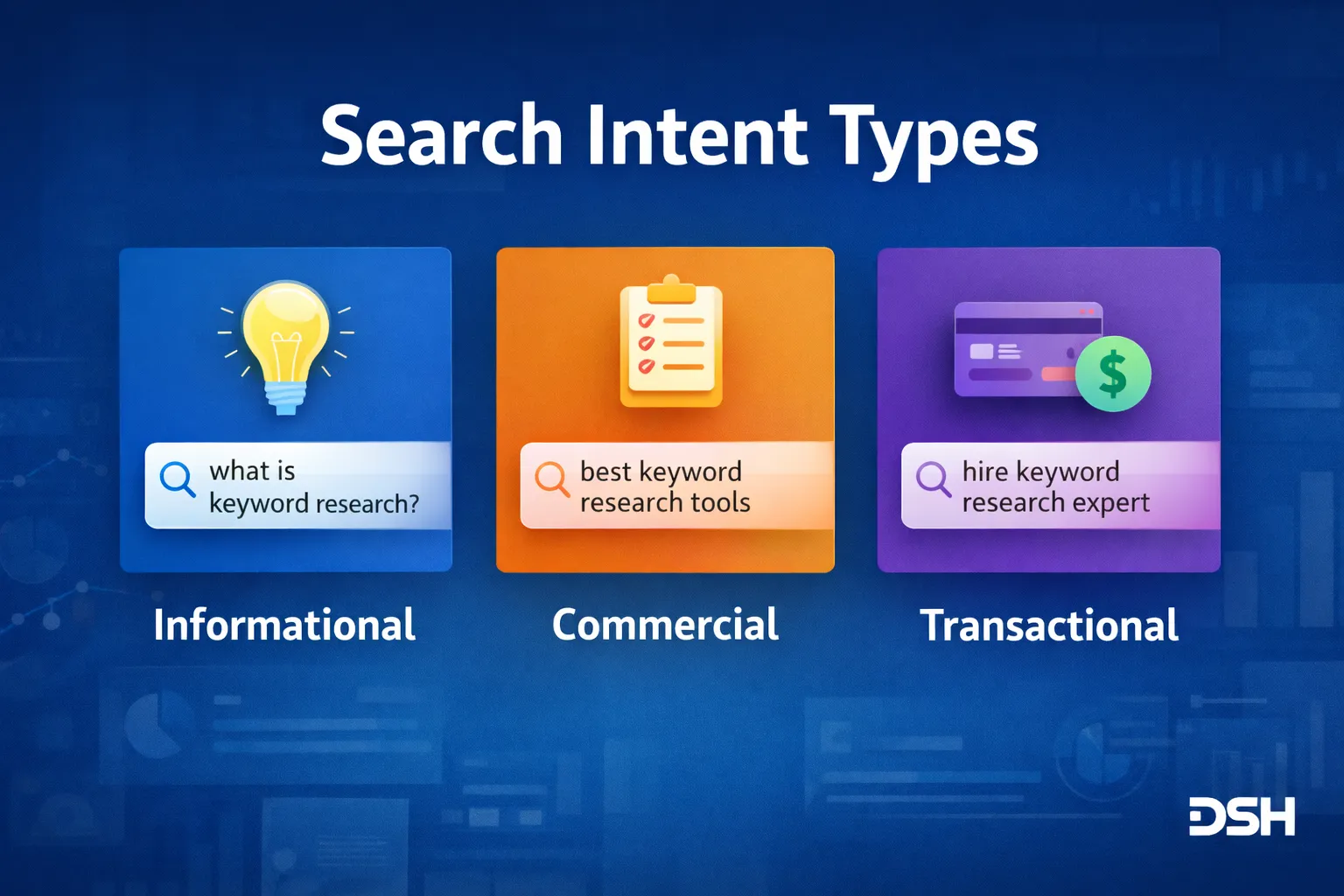
Understanding these categories allows SEO professionals to design content that matches user expectations.
You can explore search intent analysis in more detail in our guide on How to Identify Search Intent in Google SERPs.
What Are Informational Keywords?
Informational keywords represent search queries where users want to learn about a topic or find answers to specific questions.
These searches usually occur during the early stages of the user journey.
Users performing informational searches may not yet be interested in purchasing anything.
Instead, they are gathering knowledge or trying to understand a concept.
Informational searches often include question-based phrases such as:
- what is
- how to
- why does
- guide
- tutorial
For example:
what is keyword research
This search indicates that the user wants to learn about the concept rather than visit a specific website.

Content targeting informational keywords usually includes educational resources such as blog posts, tutorials, and guides.
According to Google’s SEO documentation , creating helpful content that answers user questions is one of the most important factors for ranking.
What Are Navigational Keywords?
Navigational keywords represent searches where users want to reach a specific website or brand.
In these cases, the user already knows which site they want to visit but uses a search engine as a shortcut.
Instead of typing a full URL, they search for the brand name or website.
Examples include searches such as:
- facebook login
- youtube homepage
- semrush website
- ahrefs pricing
These queries indicate that the user wants to navigate directly to a specific website.

Because of this intent, search engines usually rank the official website for navigational queries.
For example, when someone searches for “YouTube,” the official YouTube website will almost always appear as the top result.
Informational vs Navigational Keywords: Key Differences
Although informational and navigational keywords both involve search queries, they represent completely different user goals.
| Factor | Informational Keywords | Navigational Keywords |
|---|---|---|
| User Goal | Learn information | Visit specific website |
| Search Behavior | Question based searches | Brand based searches |
| Content Type | Guides, tutorials | Official websites |
| Example | what is SEO | Google Search Console login |

Recognizing these differences helps SEO professionals choose the correct content format for each keyword type.
Examples of Informational and Navigational Keywords
Below are common examples of both keyword types.
Informational Keyword Examples
- what is SEO
- how to do keyword research
- SEO beginner guide
- how search engines work
Navigational Keyword Examples
- google search console login
- ahrefs website
- semrush dashboard
- youtube homepage

In the next section of this guide, we will examine how search engines interpret informational and navigational intent in search results.
How Google SERPs Reveal Informational and Navigational Intent
One of the most reliable ways to determine keyword intent is by analyzing the search engine results page (SERP).
Search engines constantly evaluate user behavior to determine what type of content satisfies each query.
When Google displays search results, it is essentially revealing how its algorithm interprets the user's intent.
By studying the top-ranking pages for a keyword, SEO professionals can understand whether the query is informational or navigational.
For example, if the results mostly contain blog articles, tutorials, or guides, the keyword likely has informational intent.
If the results mostly display official websites or branded pages, the keyword likely has navigational intent.

This technique is commonly referred to as SERP intent analysis and is widely used by SEO professionals when validating keywords.
You can explore this process in greater depth in our guide on How to Validate a Keyword Before Writing Content.
Common SERP Patterns for Informational Keywords
Informational keywords typically produce search results that focus on education and knowledge.
These SERPs often contain blog articles, tutorials, and step-by-step guides designed to answer user questions.
Google tends to prioritize content that provides clear explanations and comprehensive coverage of the topic.
Common characteristics of informational SERPs include:
- Long-form blog posts
- Educational guides
- How-to tutorials
- Definition pages
- FAQ content
For example, a search for:
how to do keyword research
will usually display detailed tutorials and guides explaining the process.

These results confirm that Google interprets the keyword as informational.
Common SERP Patterns for Navigational Keywords
Navigational keywords produce very different search results compared to informational queries.
Because the user already knows which website they want to visit, search engines usually prioritize the official brand page.
This ensures that users can quickly reach their intended destination.
Typical navigational SERPs include:
- Official brand websites
- Login pages
- Account dashboards
- Product homepages
- Company landing pages
For example, searching for:
facebook login
will show the Facebook login page as the top result.

Because navigational searches are brand-specific, it is often very difficult for other websites to rank for these keywords.
Keyword Modifiers That Indicate Informational or Navigational Intent
Certain words within search queries often reveal the underlying intent.
These words are known as keyword modifiers.
By analyzing modifiers, SEO professionals can quickly determine the likely intent of a keyword.
Informational Keyword Modifiers
Informational searches often include words that signal learning or explanation.
- what is
- how to
- guide
- tutorial
- examples
- definition
Navigational Keyword Modifiers
Navigational searches usually include brand names or specific site-related terms.
- login
- homepage
- official site
- dashboard
- support

Recognizing these patterns allows SEO specialists to classify keywords more efficiently during research.
SERP Features That Indicate Informational Intent
Google search results often contain additional elements known as SERP features.
These features provide valuable clues about the type of intent behind a keyword.
Informational queries frequently trigger the following SERP features:
- Featured snippets
- People Also Ask boxes
- Knowledge panels
- Video results
- Image packs
These features help users quickly find answers to their questions.
For example, question-based searches often display a featured snippet summarizing the answer.

According to Google Search documentation , search results are designed to deliver the most helpful content based on user intent.
Why Navigational SERPs Are Dominated by Brands
Navigational queries are usually brand-specific.
Because users are trying to reach a particular website, Google prioritizes the official domain for those searches.
This ensures that users are directed to the correct site quickly and safely.
For example, when someone searches for:
YouTube
the official YouTube website appears at the top of the results.
This behavior is consistent across most navigational queries.
For SEO professionals, this means that attempting to rank for another company’s navigational keyword is rarely effective.

Instead, SEO strategies should focus on informational keywords where there is greater opportunity to compete.
A Simple Framework for Identifying Keyword Intent
SEO professionals often use a structured process to determine keyword intent.
A simple evaluation framework includes the following steps:
- Analyze the search results
- Identify dominant content types
- Look for keyword modifiers
- Observe SERP features
- Determine whether the query targets information or navigation
Following this process ensures that content is created for the correct search intent.
If the intent is informational, publishing a detailed guide may be effective.
If the intent is navigational, the best ranking page will almost always be the official website.

In the next section of this guide, we will explore how informational and navigational keywords fit into a complete SEO content strategy.
How to Find Informational Keywords
Informational keywords represent some of the largest traffic opportunities in SEO because millions of searches are performed daily by users seeking knowledge.
Unlike navigational searches, informational queries often have many variations and related phrases. This creates opportunities for websites to rank for large clusters of keywords.
Finding informational keywords usually begins with keyword research tools.
Common platforms used by SEO professionals include:
- Google Keyword Planner
- Ahrefs Keyword Explorer
- SEMrush Keyword Magic Tool
- Google Search Console
These tools help identify question-based search queries and long-tail informational searches.
Examples of informational keywords include:
- what is SEO
- how search engines work
- how to do keyword research
- SEO beginner guide

Many informational queries also appear in Google's autocomplete suggestions and the “People Also Ask” section.
These sources reveal common questions that users ask about a topic.
According to the Google Search documentation , creating content that directly answers user questions improves the chances of ranking in search results.
Targeting Navigational Keywords
Navigational keywords are typically brand-related queries where users want to reach a specific website.
Because these searches are strongly associated with a brand, the official website almost always ranks first.
However, navigational keywords can still be useful for brand visibility and reputation management.
For example, companies often optimize pages for queries such as:
- brand name login
- brand name pricing
- brand name support
- brand name dashboard
These pages ensure that users can easily access the correct destination when searching for the brand.

Large companies frequently build multiple landing pages optimized for navigational queries in order to guide users to important sections of their websites.
Why Informational Keywords Generate Large SEO Traffic
Informational keywords often produce significantly more organic traffic than navigational keywords.
This occurs because informational queries represent broad learning topics that many users search for.
For example, a keyword like:
what is SEO
may receive thousands of searches per month.
Additionally, informational pages often rank for hundreds of related long-tail keywords.
A single well-optimized article can attract traffic from dozens of related search queries.

Because of this potential, informational content often forms the foundation of a long-term SEO strategy.
More insights about this strategy can be found in our guide on Keyword Research for Brand New Websites.
Keyword Clustering for Informational Queries
Modern SEO strategies rarely target a single keyword. Instead, they focus on clusters of related search queries.
Keyword clustering groups similar informational keywords into a single content topic.
For example, the following queries all share informational intent:
- what is search intent
- types of search intent
- how search intent works
- search intent SEO guide
Rather than creating separate pages for each keyword, a comprehensive article can target the entire cluster.
Search engines are capable of understanding semantic relationships between queries, allowing one well-structured page to rank for many related keywords.

This clustering strategy improves topical authority and increases the total number of keywords a page can rank for.
Planning Content for Informational Keywords
When creating informational content, the goal is to provide clear and comprehensive answers to user questions.
Successful informational pages often follow structured formats such as:
Search Intent SERP Analysis Guide- Step-by-step tutorials
- Beginner guides
- Educational articles
- How-to resources
These formats align with user expectations when performing informational searches.
For example, a query like:
how to identify search intent
would likely require a detailed guide explaining the concept, examples, and practical steps.

High-quality informational content also tends to include visual explanations, structured headings, and internal links to related topics.
Using Internal Links to Strengthen Informational Content
Internal linking plays a crucial role in building topical authority for informational content.
By connecting related articles, websites help search engines understand how different topics relate to each other.
For example, an article about informational keywords might link to related resources such as:
- How to Identify Search Intent in Google SERPs
- Commercial vs Transactional Keywords Explained
- Keyword Clustering Framework
These internal links create a network of related pages that strengthens topical authority across the website.

In the final section of this guide, we will explore how informational and navigational keywords fit into a complete SEO content strategy and how websites can use them together effectively.
How to Find Informational Keywords
Informational keywords represent some of the largest traffic opportunities in SEO because millions of searches are performed daily by users seeking knowledge.
Unlike navigational searches, informational queries often have many variations and related phrases. This creates opportunities for websites to rank for large clusters of keywords.
Finding informational keywords usually begins with keyword research tools.
Common platforms used by SEO professionals include:
- Google Keyword Planner
- Ahrefs Keyword Explorer
- SEMrush Keyword Magic Tool
- Google Search Console
These tools help identify question-based search queries and long-tail informational searches.
Examples of informational keywords include:
- what is SEO
- how search engines work
- how to do keyword research
- SEO beginner guide
Many informational queries also appear in Google's autocomplete suggestions and the “People Also Ask” section.
These sources reveal common questions that users ask about a topic.
According to the Google Search documentation , creating content that directly answers user questions improves the chances of ranking in search results.
Targeting Navigational Keywords
Navigational keywords are typically brand-related queries where users want to reach a specific website.
Because these searches are strongly associated with a brand, the official website almost always ranks first.
However, navigational keywords can still be useful for brand visibility and reputation management.
For example, companies often optimize pages for queries such as:
- brand name login
- brand name pricing
- brand name support
- brand name dashboard
These pages ensure that users can easily access the correct destination when searching for the brand.
Large companies frequently build multiple landing pages optimized for navigational queries in order to guide users to important sections of their websites.
Why Informational Keywords Generate Large SEO Traffic
Informational keywords often produce significantly more organic traffic than navigational keywords.
This occurs because informational queries represent broad learning topics that many users search for.
For example, a keyword like:
what is SEO
may receive thousands of searches per month.
Additionally, informational pages often rank for hundreds of related long-tail keywords.
A single well-optimized article can attract traffic from dozens of related search queries.
Because of this potential, informational content often forms the foundation of a long-term SEO strategy.
More insights about this strategy can be found in our guide on Keyword Research for Brand New Websites.
Keyword Clustering for Informational Queries
Modern SEO strategies rarely target a single keyword. Instead, they focus on clusters of related search queries.
Keyword clustering groups similar informational keywords into a single content topic.
For example, the following queries all share informational intent:
- what is search intent
- types of search intent
- how search intent works
- search intent SEO guide
Rather than creating separate pages for each keyword, a comprehensive article can target the entire cluster.
Search engines are capable of understanding semantic relationships between queries, allowing one well-structured page to rank for many related keywords.
This clustering strategy improves topical authority and increases the total number of keywords a page can rank for.
Planning Content for Informational Keywords
When creating informational content, the goal is to provide clear and comprehensive answers to user questions.
Successful informational pages often follow structured formats such as:
- Step-by-step tutorials
- Beginner guides
- Educational articles
- How-to resources
These formats align with user expectations when performing informational searches.
For example, a query like:
how to identify search intent
would likely require a detailed guide explaining the concept, examples, and practical steps.
High-quality informational content also tends to include visual explanations, structured headings, and internal links to related topics.
Using Internal Links to Strengthen Informational Content
Internal linking plays a crucial role in building topical authority for informational content.
By connecting related articles, websites help search engines understand how different topics relate to each other.
For example, an article about informational keywords might link to related resources such as:
- How to Identify Search Intent in Google SERPs
- Commercial vs Transactional Keywords Explained
- Keyword Clustering Framework
These internal links create a network of related pages that strengthens topical authority across the website.
In the final section of this guide, we will explore how informational and navigational keywords fit into a complete SEO content strategy and how websites can use them together effectively.
Using Informational and Navigational Keywords in an SEO Strategy
Successful SEO strategies rarely rely on a single type of keyword. Instead, they combine informational and navigational queries to attract users at different stages of their online journey.
Informational keywords attract users who are learning about a topic and seeking knowledge.
Navigational keywords attract users who already know which brand or website they want to visit.
By targeting both types of keywords, websites can build visibility during the research phase while also capturing brand-focused traffic.
- Informational keywords build organic traffic
- Navigational keywords strengthen brand presence
- Together they improve overall search visibility

When both keyword types are used effectively, websites can attract visitors across multiple stages of the search journey.
Building Topical Authority With Informational Content
Informational keywords play an essential role in building topical authority.
Topical authority refers to a website’s depth of knowledge within a particular subject area.
Search engines tend to rank websites higher when they demonstrate expertise across multiple related topics.
For example, an SEO website might publish informational articles covering topics such as:
- What is SEO
- How search engines work
- Keyword research strategies
- Search intent analysis
By publishing many related articles, the website demonstrates expertise within the SEO field.

Over time, this content ecosystem signals to search engines that the website is a reliable source of information on the topic.
How Navigational Keywords Strengthen Brand Visibility
Navigational keywords are closely connected to brand recognition.
When users search for brand names or specific websites, they are demonstrating awareness of that brand.
Strong brands often generate thousands of navigational searches each month.
Examples include queries such as:
- google search console
- youtube homepage
- semrush login
- ahrefs pricing
These searches indicate that users already trust the brand and want to reach its website.

For businesses, increasing navigational searches is often a sign that brand awareness is growing.
Internal Linking Between Informational and Navigational Content
Internal linking helps connect informational content with brand-focused pages.
For example, an informational article explaining search intent may link to other SEO resources across the website.
These internal links help search engines understand relationships between pages.
A typical internal linking structure might include connections to articles such as:
- How to Identify Search Intent in Google SERPs
- Commercial vs Transactional Keywords Explained
- How to Validate a Keyword Before Writing Content

This internal linking network strengthens topical authority and improves crawling efficiency for search engines.
The Future of Search Intent in SEO
Search engines are becoming increasingly sophisticated in understanding user intent.
Modern algorithms use artificial intelligence and natural language processing to interpret search queries more accurately.
Rather than matching exact keywords, search engines now analyze the meaning and context of queries.
Because of this evolution, SEO strategies are shifting toward semantic content and intent-based optimization.
Websites that consistently produce helpful and relevant content will continue to perform well in search rankings.

Final Conclusion
Informational and navigational keywords represent two important categories of search intent in SEO.
Informational queries occur when users are searching for knowledge and answers to questions.
Navigational queries occur when users want to reach a specific website or brand.
Understanding the difference between these keyword types helps SEO professionals design effective content strategies.
Informational content attracts large volumes of organic traffic and helps build topical authority.
Navigational searches strengthen brand recognition and guide users to the correct website.
By combining both keyword types within a structured SEO strategy, websites can attract users throughout different stages of their search journey.
Frequently Asked Questions About Informational and Navigational Keywords
1. What are informational keywords?
Informational keywords are search queries where users want to learn about a topic or find answers to questions.
2. What are navigational keywords?
Navigational keywords are queries where users want to reach a specific website or brand.
3. What is the difference between informational and navigational keywords?
Informational keywords focus on learning while navigational keywords focus on visiting a specific site.
4. Why are informational keywords important?
They generate large volumes of organic traffic by answering user questions.
5. Why are navigational keywords important?
They help users find a specific brand or website quickly.
6. What are examples of informational keywords?
Examples include "what is SEO" and "how to do keyword research".
7. What are examples of navigational keywords?
Examples include "YouTube homepage" and "Google Search Console login".
8. What is search intent?
Search intent describes the purpose behind a search query.
9. How does search intent affect SEO?
Search engines rank content that best satisfies the user's intent.
10. Can one keyword have mixed intent?
Yes, some queries may contain both informational and navigational intent.
11. What content targets informational keywords?
Blog posts, guides, tutorials, and educational articles.
12. What content targets navigational keywords?
Official websites and brand pages.
13. How do you identify informational keywords?
They often include words like what, how, guide, or tutorial.
14. How do you identify navigational keywords?
They usually include brand names or website-specific terms.
15. What is topical authority?
Topical authority refers to expertise within a specific subject area.
16. What is keyword clustering?
Keyword clustering groups related search queries into a single topic.
17. What is semantic search?
Semantic search focuses on understanding the meaning of search queries.
18. What are long tail keywords?
Long tail keywords are longer and more specific search queries.
19. How does internal linking help SEO?
Internal links connect related pages and strengthen topical authority.
20. What is a topic cluster?
A topic cluster is a group of related articles connected through internal links.
21. What is a featured snippet?
A featured snippet is a highlighted answer at the top of search results.
22. Why do informational keywords generate more traffic?
Because many users search for educational content.
23. Why are navigational queries dominated by brands?
Because users are specifically searching for those brands.
24. What is the SEO funnel?
The SEO funnel represents different stages of user intent.
25. What is top of funnel content?
Top funnel content educates users during the research stage.
26. What is middle of funnel content?
Middle funnel content helps users compare solutions.
27. What is bottom of funnel content?
Bottom funnel content encourages users to take action.
28. Does Google prioritize search intent?
Yes, Google ranks content that best matches user intent.
29. Can informational content lead to conversions?
Yes, informational content can guide users toward commercial pages.
30. What is the best keyword strategy?
The best strategy targets multiple keyword types across the search journey.
This guide belongs to our structured SEO system covering keyword research, SERP analysis, technical SEO, and migration strategies.
Explore Full Framework →