
Commercial vs Transactional Keywords Explained
Understanding the difference between commercial and transactional keywords is essential for building effective SEO strategies.
Both keyword types represent users who are close to making a purchase decision, but their intentions are slightly different.
Commercial keywords indicate that users are researching products or services before making a decision.
Transactional keywords, on the other hand, indicate that users are ready to take an action such as buying a product, signing up for a service, or completing a conversion.
Recognizing this distinction allows SEO professionals to design content that matches the correct stage of the buyer’s journey.
Quick Navigation: Keyword Intent Overview · Commercial Keywords · Transactional Keywords · Key Differences · Examples
Author: Hassan – SEO Researcher · Updated March 2026
Understanding Keyword Intent in SEO
Search intent is the purpose behind a user’s search query. When users type something into a search engine, they usually have a specific goal in mind.
SEO professionals categorize search intent into four major types:
- Informational intent
- Navigational intent
- Commercial intent
- Transactional intent
Each intent category represents a different stage of the user's decision-making process.
Informational searches occur when users want to learn about a topic.
Navigational searches occur when users want to visit a specific website.
Commercial and transactional searches occur when users are closer to making a purchase decision.
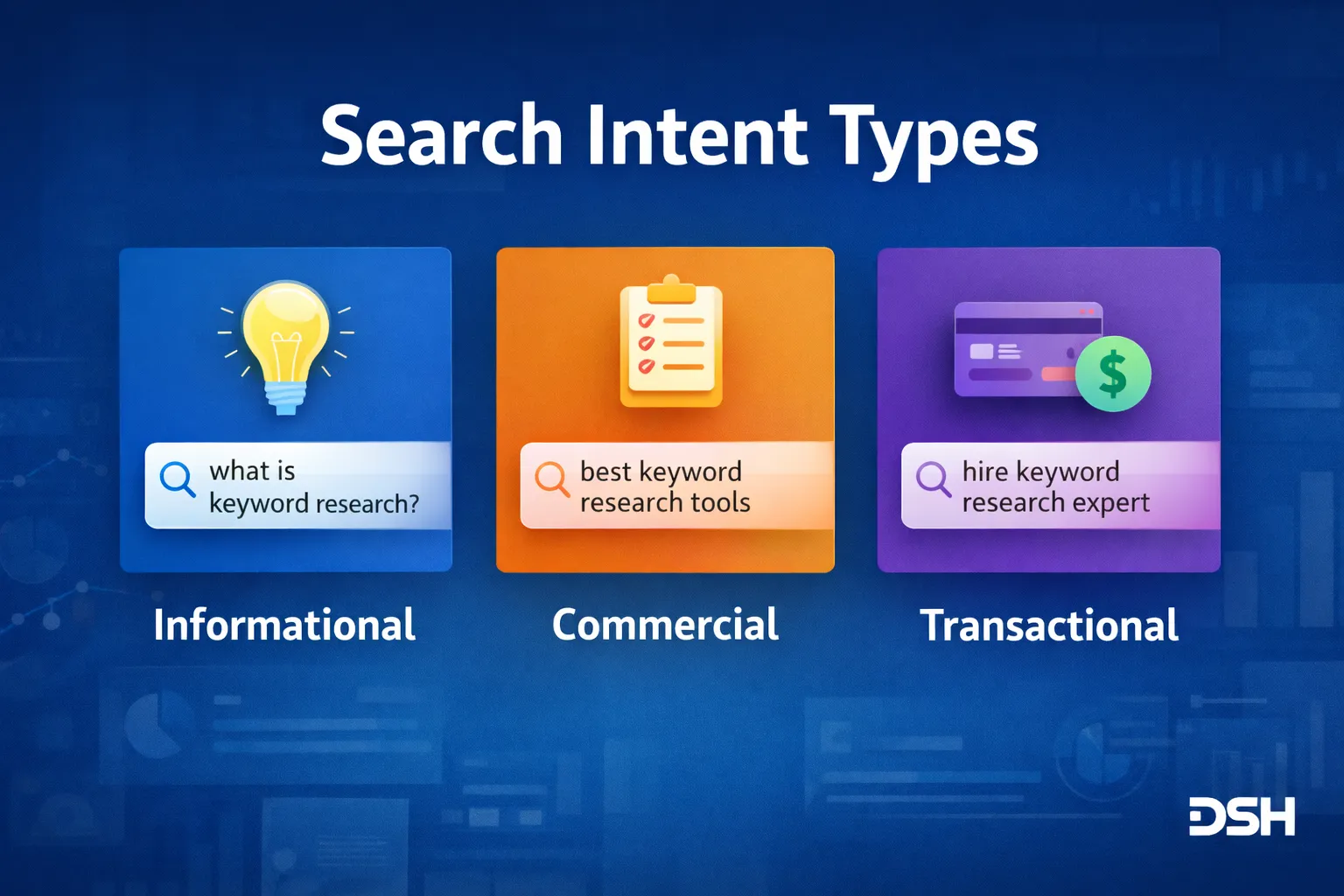
Understanding these categories helps SEO professionals determine what type of content should be created for a particular keyword.
For example, informational keywords usually require educational articles or tutorials.
Commercial and transactional keywords often require product pages, comparison guides, or service landing pages.
You can learn more about search intent analysis in our guide on How to Identify Search Intent in Google SERPs.
What Are Commercial Keywords?
Commercial keywords indicate that a user is researching products or services before making a purchase decision.
These searches typically occur during the middle stage of the buyer’s journey.
Users performing these searches want to compare options, evaluate features, and determine which product or service best fits their needs.
Instead of immediately purchasing something, they are gathering information to help them decide.
Commercial search queries often include words such as:
- best
- top
- review
- comparison
- alternatives
For example:
best SEO tools
This search indicates that the user wants to compare different tools before choosing one.

Content targeting commercial keywords often includes:
- Product comparison guides
- Review articles
- Best-of lists
- Feature comparisons
Educational resources such as Moz's search intent guide also highlight the importance of identifying commercial queries during keyword research.
What Are Transactional Keywords?
Transactional keywords indicate that the user is ready to perform an action.
This action may involve purchasing a product, signing up for a service, or downloading a tool.
These searches usually occur at the final stage of the buyer’s journey.
Users performing transactional searches already know what they want.
Instead of researching options, they are ready to complete a transaction.
Transactional keywords often include modifiers such as:
- buy
- order
- discount
- pricing
- subscribe
For example:
buy keyword research tool
This query clearly indicates purchase intent.

Content targeting transactional keywords usually includes landing pages or product pages optimized for conversions.
Commercial vs Transactional Keywords: Key Differences
Although commercial and transactional keywords both indicate buying intent, they represent different stages of the purchasing process.
| Factor | Commercial Keywords | Transactional Keywords |
|---|---|---|
| User Goal | Research products | Complete purchase |
| Buyer Stage | Evaluation | Decision |
| Content Type | Reviews, comparisons | Product pages |
| Example | best SEO tools | buy SEO tool |

Understanding these differences helps create content that matches the user's position within the buying journey.
Examples of Commercial and Transactional Keywords
Below are examples of both keyword types.
Commercial Keyword Examples
- best keyword research tools
- SEO software comparison
- top SEO platforms
- Ahrefs vs SEMrush
Transactional Keyword Examples
- buy SEO tool
- Ahrefs pricing
- SEMrush subscription
- order SEO software

In the next section of this guide, we will explore how search engines interpret commercial and transactional intent within search engine results pages.
How Google Identifies Commercial and Transactional Intent
Search engines attempt to understand not only what users are searching for but also why they are searching for it.
Google’s ranking systems analyze billions of search queries to determine the type of content that best satisfies different user goals.
For keywords that indicate buying intent, search results often prioritize pages designed to help users evaluate or purchase products.
These pages may include comparison articles, product listings, software landing pages, or pricing pages.
By studying search engine results pages (SERPs), SEO professionals can determine whether a keyword represents commercial or transactional intent.

SERP analysis provides one of the most reliable methods for understanding how search engines interpret user intent.
Instead of relying solely on keyword tools, analyzing real search results helps identify the dominant intent behind a query.
SERP Patterns for Commercial Keywords
Commercial keywords usually display search results that help users compare products or services.
Google often ranks content designed to assist with evaluation rather than direct purchase.
These pages typically provide detailed information about features, pricing differences, and performance comparisons.
Common SERP results for commercial keywords include:
- Product comparison articles
- Best-of list articles
- Review websites
- Expert recommendations
For example, a search for:
best keyword research tools
usually produces list-style articles comparing different tools rather than direct product pages.
These articles help users research their options before making a final decision.

Recognizing these patterns helps determine when a keyword represents commercial search intent.
SERP Patterns for Transactional Keywords
Transactional keywords often produce search results that allow users to complete an action immediately.
These pages are usually optimized for conversions rather than education.
Examples include:
- Product landing pages
- Service sign-up pages
- Pricing pages
- E-commerce product listings
For example, a search such as:
buy SEO software
typically produces results from product websites offering direct purchase options.
Unlike commercial queries, these results rarely focus on comparisons or long explanations.
Instead, they prioritize clear calls to action.

This difference reflects the user's readiness to complete a transaction.
Keyword Modifiers That Reveal Buying Intent
Keyword modifiers provide strong clues about the type of intent behind a search query.
Certain words consistently appear in searches related to commercial and transactional intent.
Recognizing these modifiers helps SEO professionals classify keywords more efficiently during research.
Common Commercial Keyword Modifiers
- best
- top
- review
- comparison
- alternatives
Common Transactional Keyword Modifiers
- buy
- discount
- order
- pricing
- subscribe
For example, the query:
best email marketing tools
indicates that the user is researching options.
Meanwhile the query:
buy email marketing software
indicates that the user intends to purchase a tool.

Commercial vs Transactional Keywords in the Buying Funnel
Commercial and transactional keywords correspond to different stages of the customer journey.
Most buying processes follow a structured decision path.
Users typically move through several stages before making a purchase.
These stages include awareness, research, evaluation, and decision.
Commercial keywords generally appear during the evaluation stage.
Users are actively comparing options and determining which product or service best fits their needs.
Transactional keywords appear during the final decision stage.
At this point, users already know what they want and are ready to complete a transaction.

Understanding this funnel helps SEO professionals design content that targets the correct stage of the user's journey.
SERP Features That Indicate Buying Intent
Search engine results pages contain additional elements that reveal commercial or transactional intent.
These elements are known as SERP features.
For queries related to buying decisions, Google often displays features designed to help users evaluate or purchase products.
Common SERP features include:
- Product carousels
- Shopping results
- Review snippets
- Price comparisons
These features signal that the keyword has strong buying intent.
SEO professionals analyze these features to determine whether a keyword is better suited for commercial content or transactional pages.

Understanding these signals helps align content with the expectations of search engine algorithms and users.
Checklist for Identifying Commercial vs Transactional Keywords
Before creating content for a keyword, it is useful to analyze the search results and evaluate several intent signals.
This checklist helps determine whether a keyword represents commercial or transactional intent.
- Are the top results comparison articles or product pages?
- Do page titles contain words such as “best” or “buy”?
- Are there product listings or shopping ads?
- Are the results educational or conversion focused?
- Do pages contain pricing or purchasing options?
Answering these questions helps determine the dominant search intent.
In the next section of this guide, we will explore how keyword research tools can identify commercial and transactional opportunities.
Keyword Research Strategy for Commercial and Transactional Keywords
Finding commercial and transactional keywords requires a different research strategy than identifying informational queries.
Informational keywords usually focus on questions and educational topics, while commercial and transactional keywords focus on user actions and buying decisions.
Because these keywords are closer to the conversion stage of the buyer journey, they often have higher business value.
SEO professionals therefore prioritize identifying these keywords when designing revenue-focused SEO strategies.

A well-structured keyword research process ensures that websites capture high-intent traffic capable of generating conversions.
How to Discover Commercial Keywords
Commercial keywords often appear when users are comparing products, researching alternatives, or evaluating features.
These keywords typically contain modifiers that signal evaluation intent.
SEO professionals often begin by identifying product-related topics within their niche.
For example, within the SEO software industry, users may search for tools that help with keyword research, backlink analysis, or site audits.
Common commercial keyword structures include:
- best [product category]
- top [tool category]
- [tool] alternatives
- [tool] vs [competitor]
For example:
- best SEO tools
- Ahrefs alternatives
- SEMrush vs Ahrefs
- top keyword research tools

These queries show that the user is evaluating multiple options before making a decision.
How to Discover Transactional Keywords
Transactional keywords are easier to identify because they often include clear action-based modifiers.
These queries indicate that the user intends to complete a purchase or sign up for a service.
Common transactional keyword modifiers include:
- buy
- pricing
- discount
- order
- subscription
Examples include:
- buy SEO software
- Ahrefs pricing
- SEMrush subscription
- SEO tool discount
These keywords usually lead to landing pages designed to encourage conversions.

Because these queries indicate strong purchase intent, they are often considered high-value keywords.
Tools Used to Identify High-Intent Keywords
SEO professionals rely on keyword research tools to identify commercial and transactional keyword opportunities.
These tools analyze search data to estimate search volume, competition, and keyword variations.
Popular keyword research tools include:
- Ahrefs
- SEMrush
- Google Keyword Planner
- Ubersuggest
These platforms allow users to discover related keyword variations and evaluate how frequently users search for specific queries.
For example, entering a seed keyword such as “SEO tools” into a keyword research platform may reveal related commercial keywords such as:
- best SEO tools
- SEO software comparison
- top SEO platforms
Similarly, transactional keyword variations may include:
- SEO software pricing
- buy SEO software
- SEO tools subscription

Using these tools helps identify keywords with both search demand and strong buying intent.
Clustering Commercial and Transactional Keywords
Once high-intent keywords are discovered, the next step is grouping them into clusters.
Keyword clustering organizes related search queries into topic groups that can be targeted within a single piece of content.
For example, the following queries share similar commercial intent:
- best SEO tools
- top SEO software
- SEO tools comparison
- best tools for SEO analysis
Instead of creating separate pages for each query, these keywords can be grouped into one comprehensive comparison article.
Similarly, transactional keywords can be clustered for product pages.
For example:
- Ahrefs pricing
- buy Ahrefs subscription
- Ahrefs plans

Clustering helps ensure that each page targets a coherent group of keywords with similar intent.
You can explore this concept further in our guide on Keyword Clustering Framework.
Optimizing Content for Commercial and Transactional Keywords
After identifying and clustering high-intent keywords, the next step is creating content optimized for conversions.
Commercial keyword pages often include detailed comparisons and reviews that help users evaluate options.
Transactional keyword pages focus more heavily on conversion elements such as pricing information, product features, and calls to action.
Common optimization elements include:
- Clear product descriptions
- Comparison tables
- Feature highlights
- Pricing information
- Strong calls to action
These elements help move users from research to decision-making.

Combining commercial and transactional keyword strategies helps websites capture traffic from users at different stages of the purchasing process.
Why High-Intent Keywords Drive Revenue
Not all keywords provide the same value for businesses.
Informational queries may generate large amounts of traffic, but they often have lower conversion potential.
Commercial and transactional keywords typically produce fewer searches but significantly higher conversion rates.
For example, a user searching for:
what is SEO
is likely learning about the topic.
However, a user searching for:
buy SEO software
is much closer to making a purchase.

Because of this difference, many SEO strategies prioritize high-intent keywords when designing conversion-focused content.
In the final section of this guide, we will explore how to build a complete SEO content strategy that combines informational, commercial, and transactional keywords.
Using Commercial and Transactional Keywords in an SEO Funnel
Successful SEO strategies rarely rely on a single type of keyword. Instead, they combine informational, commercial, and transactional queries to capture users at different stages of the search journey.
This approach is often described as an SEO funnel.
At the top of the funnel are informational keywords where users are researching and learning about a topic.
In the middle of the funnel are commercial keywords where users evaluate products or services.
At the bottom of the funnel are transactional keywords where users are ready to complete a purchase.
Each stage requires different types of content.
- Top funnel content: educational guides and tutorials
- Middle funnel content: product comparisons and reviews
- Bottom funnel content: product pages and service landing pages

By covering all stages of the funnel, websites can attract visitors early in the research phase and guide them toward eventual conversions.
Optimizing Commercial Content for Conversions
Commercial keyword pages play an important role in guiding users from research to decision-making.
These pages should help users evaluate multiple options and clearly explain the advantages of each product or service.
Well-optimized commercial content often includes several key elements.
- Product comparison tables
- Feature breakdowns
- Pros and cons lists
- Expert recommendations
- User reviews
These elements help users make informed decisions.
For example, comparison articles such as:
Ahrefs vs SEMrush
help users understand the differences between competing tools.
Internal links can then direct users toward transactional pages where they can sign up or purchase the product.

Optimizing Transactional Pages for Conversions
Transactional keyword pages focus on encouraging users to take action.
Unlike informational articles, these pages should minimize distractions and provide clear paths to conversion.
Effective transactional pages often include:
- Clear pricing information
- Prominent call-to-action buttons
- Customer testimonials
- Product feature summaries
- Trust signals and guarantees
These elements reduce uncertainty and make it easier for users to complete a purchase or sign up.
For example, a pricing page for SEO software may include multiple subscription tiers with clear feature comparisons.

Internal Linking Between Commercial and Transactional Pages
Internal linking helps connect different stages of the SEO funnel.
For example, a commercial comparison article can link directly to product pages optimized for transactional keywords.
These internal links guide users from evaluation content to conversion pages.
A typical internal linking structure might include:
- Informational guides linking to comparison articles
- Comparison articles linking to product pages
- Product pages linking to sign-up or checkout pages
For example, you might link commercial content to related resources such as:
- How to Identify Search Intent in Google SERPs
- Keyword Clustering Framework
- How to Validate a Keyword Before Writing Content

This linking structure strengthens topical authority while guiding users toward conversions.
The Future of Keyword Intent in SEO
Search engines continue to improve their ability to interpret user intent.
Advances in artificial intelligence and semantic search allow algorithms to understand complex queries and context more effectively.
Rather than focusing on individual keywords, modern search engines analyze topics and relationships between concepts.
Because of this shift, SEO strategies increasingly emphasize intent-based content rather than keyword repetition.
Websites that consistently produce helpful, intent-focused content are more likely to maintain strong visibility in search results.

Final Conclusion
Commercial and transactional keywords represent two of the most valuable search intent categories in SEO.
Although both indicate purchase intent, they occur at different stages of the buyer’s journey.
Commercial keywords appear during the research and evaluation phase, while transactional keywords appear when users are ready to complete a purchase.
Understanding this difference allows SEO professionals to design content strategies that capture users at multiple stages of the decision-making process.
By combining commercial comparison content with well-optimized transactional pages, websites can guide users from research to conversion.
Over time, this intent-focused strategy helps build authority, increase organic traffic, and generate consistent conversions.
Frequently Asked Questions About Commercial and Transactional Keywords
1. What are commercial keywords?
Commercial keywords are search queries used by people researching products or services before making a purchase.
2. What are transactional keywords?
Transactional keywords indicate that users are ready to complete an action such as buying a product or subscribing to a service.
3. What is the difference between commercial and transactional keywords?
Commercial keywords indicate evaluation intent, while transactional keywords indicate purchase intent.
4. Why are commercial keywords important in SEO?
Commercial keywords help attract users who are actively comparing products before making a decision.
5. Why are transactional keywords valuable?
Transactional keywords often produce higher conversion rates because users are ready to take action.
6. What modifiers indicate commercial intent?
Words such as best, top, review, comparison, and alternatives often indicate commercial intent.
7. What modifiers indicate transactional intent?
Words such as buy, order, pricing, and discount usually indicate transactional intent.
8. How do you identify commercial keywords?
Commercial keywords often appear in searches comparing products or services.
9. How do you identify transactional keywords?
Transactional keywords usually include action-based modifiers such as buy or subscribe.
10. Can one keyword have mixed intent?
Yes, some keywords display mixed search intent depending on the user’s needs.
11. What is keyword intent in SEO?
Keyword intent describes the purpose behind a user’s search query.
12. What is the buyer journey?
The buyer journey describes the process users follow before making a purchase decision.
13. What are high-intent keywords?
High-intent keywords indicate that users are close to completing a purchase.
14. What content works best for commercial keywords?
Comparison guides and product reviews work well for commercial queries.
15. What content works best for transactional keywords?
Product pages and service landing pages work best for transactional queries.
16. What is an SEO funnel?
An SEO funnel represents the stages users move through before completing a conversion.
17. What is middle-of-funnel content?
Middle-of-funnel content helps users compare products and evaluate options.
18. What is bottom-of-funnel content?
Bottom-of-funnel content encourages users to complete a purchase.
19. How do SERPs reveal search intent?
Search results show patterns that indicate the type of content Google prefers for a query.
20. What is keyword clustering?
Keyword clustering groups related search queries into topic clusters.
21. What are comparison keywords?
Comparison keywords help users evaluate multiple products or services.
22. What are product keywords?
Product keywords target users looking for specific products or brands.
23. What is a product landing page?
A product landing page is designed to encourage users to purchase a product.
24. How do internal links help conversions?
Internal links guide users from informational pages to commercial or transactional pages.
25. What is search intent optimization?
Search intent optimization aligns content with user expectations.
26. Why do commercial keywords have lower conversions?
Users are still researching options and may not yet be ready to purchase.
27. Why do transactional keywords convert better?
Users already know what they want and are ready to complete a transaction.
28. Can commercial content lead to conversions?
Yes, comparison articles often guide users toward transactional pages.
29. How do SEO tools help identify intent?
Keyword research tools reveal search patterns and keyword modifiers.
30. What is the best strategy for high-intent keywords?
The best strategy is combining commercial comparison content with optimized transactional landing pages.
This guide belongs to our structured SEO system covering keyword research, SERP analysis, technical SEO, and migration strategies.
Explore Full Framework →