
How Google Understands Search Intent (NLP & Semantic Search)
Search engines have evolved dramatically over the past decade. Early search algorithms relied heavily on keyword matching, but modern search engines attempt to understand the meaning behind a query rather than simply matching exact words.
Today, Google uses advanced artificial intelligence technologies such as natural language processing (NLP) and semantic search to interpret user queries and determine search intent.
Search intent refers to the underlying goal that a user wants to accomplish when performing a search.
Understanding this intent allows Google to deliver search results that better satisfy the user’s needs.
Instead of focusing only on individual keywords, modern search engines analyze context, relationships between words, and patterns in user behavior.
Quick Navigation: Search Intent Overview · Natural Language Processing · Semantic Search · Query Understanding · Intent Detection
Author: Hassan – SEO Researcher · Updated March 2026
Understanding Search Intent
Search intent is one of the most important concepts in modern SEO.
Whenever someone types a query into Google, they are trying to accomplish a specific task.
They might want to learn something, visit a particular website, compare products, or complete a purchase.
Search engines attempt to identify this goal so they can deliver the most relevant results.
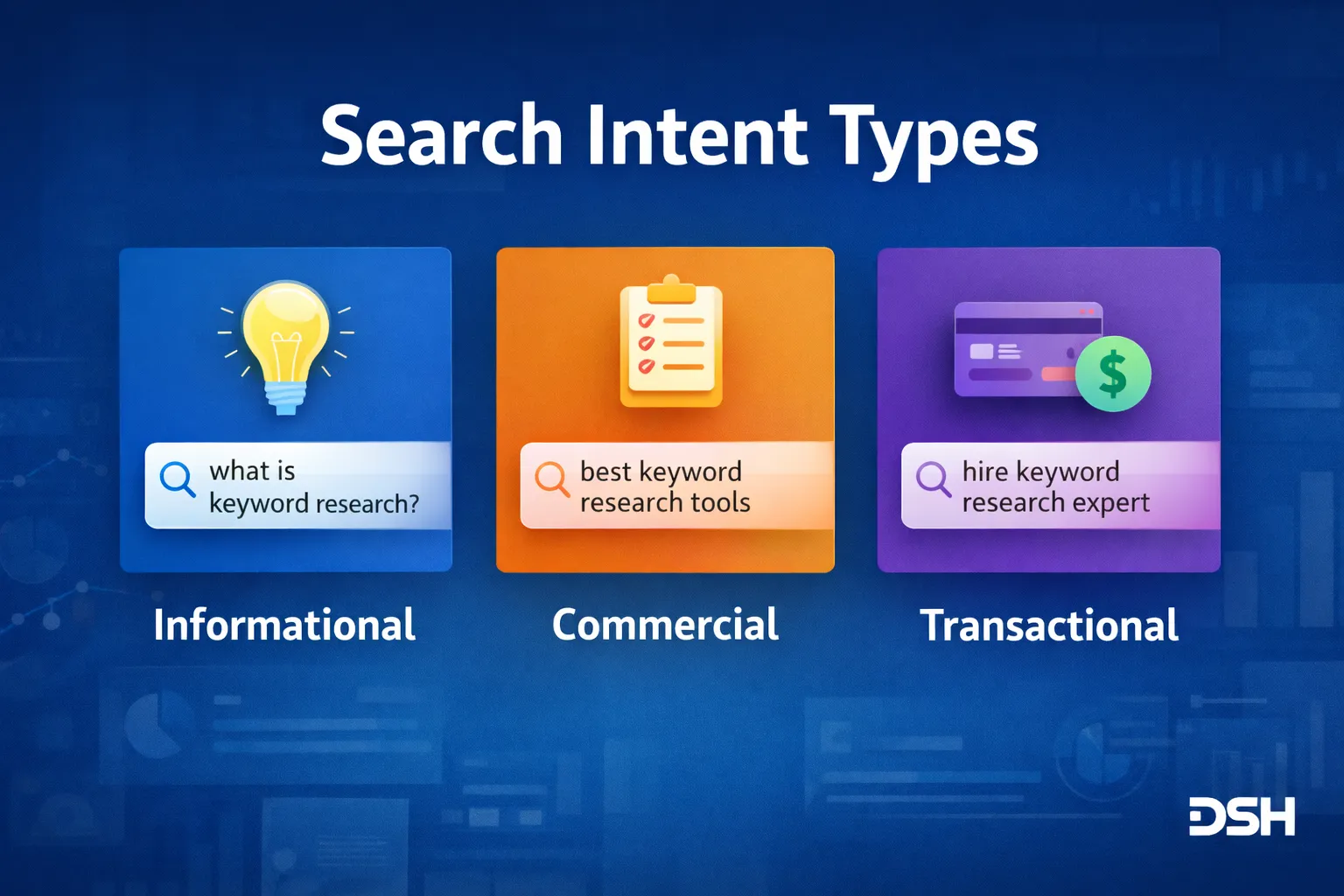
SEO professionals usually classify search intent into four main categories.
- Informational intent
- Navigational intent
- Commercial intent
- Transactional intent
These intent categories help search engines determine what type of content should rank for a given query.
You can explore search intent analysis in greater depth in our guide on How to Identify Search Intent in Google SERPs.
What Is Natural Language Processing in Search Engines
Natural language processing (NLP) is a branch of artificial intelligence that enables computers to understand human language.
Search engines use NLP techniques to analyze the words within a search query and interpret their meaning.
Instead of treating each word separately, NLP algorithms examine the relationships between words and phrases.
For example, a query such as:
how to find low competition keywords
contains multiple signals that indicate the user wants a tutorial or educational resource.
NLP allows search engines to understand these signals and deliver appropriate results.

Google has integrated many NLP technologies into its search algorithms, including machine learning models that analyze billions of search queries.
More details about Google's search technology can be found in Google Search documentation .
What Is Semantic Search
Semantic search refers to a search engine’s ability to understand the meaning behind queries rather than simply matching keywords.
Traditional search algorithms often relied on exact keyword matches.
However, modern search engines analyze context, synonyms, and relationships between topics.
For example, a search for:
best tools for keyword research
may return results containing phrases such as “SEO tools” or “keyword research software.”
Even though the wording differs slightly, the meaning remains the same.

Semantic search allows Google to interpret queries more accurately and match them with relevant content.
How Google Interprets Search Queries
When a user submits a search query, Google performs several steps to understand what the query means.
These steps include analyzing language patterns, recognizing entities, and identifying the likely search intent.
The search engine examines factors such as:
- Words and phrases in the query
- Relationships between keywords
- Historical search behavior
- User location and context
By combining these signals, Google can determine which results are most relevant.

This query understanding process allows search engines to deliver results that match the user's true intention.
How Google Detects Search Intent
Detecting search intent is a critical step in Google's ranking process.
Search engines analyze the structure of the query, the context of words, and patterns from previous searches.
For example, queries containing phrases such as “how to,” “guide,” or “tutorial” usually indicate informational intent.
Queries containing brand names often indicate navigational intent.
Google also studies user engagement signals such as click behavior and dwell time to determine whether results satisfy user expectations.

In the next section of this guide, we will explore the advanced algorithms Google uses to interpret search queries and analyze semantic relationships between topics.
Google Algorithms That Understand Search Intent
Google’s ability to interpret search intent is powered by multiple advanced algorithms that analyze language patterns, context, and user behavior.
Rather than relying on a single system, Google combines several machine learning models that work together to interpret queries and match them with relevant content.
Some of the most important technologies involved in query understanding include:
- RankBrain
- BERT
- MUM
- Neural matching
These technologies allow Google to analyze language in a way that more closely resembles how humans interpret meaning.

Together, these systems help Google determine the purpose behind a search query and deliver results that satisfy the user’s needs.
RankBrain: Google's Machine Learning Algorithm
RankBrain was introduced by Google as one of the first major machine learning components of its search algorithm.
The purpose of RankBrain is to help Google understand unfamiliar or ambiguous search queries.
Before machine learning systems like RankBrain were introduced, search engines often struggled with queries that had never been seen before.
RankBrain solves this problem by identifying patterns and relationships between words.
For example, if someone searches for a phrase that Google has not encountered previously, RankBrain can compare the query with similar searches to determine the likely meaning.

This ability to interpret new queries allows Google to deliver relevant results even when the exact wording has never been searched before.
BERT: Understanding Context in Search Queries
BERT (Bidirectional Encoder Representations from Transformers) represents another major advancement in Google’s ability to understand language.
Unlike earlier algorithms that analyzed words individually, BERT examines the relationships between words within a sentence.
This allows the algorithm to interpret context more accurately.
For example, the query:
can you get medicine for someone pharmacy
contains multiple words that must be interpreted together to understand the meaning of the question.
BERT analyzes the full context of the query rather than focusing only on keywords.

This improved contextual understanding helps Google provide results that more accurately match the user’s intent.
MUM: Multitask Unified Model
MUM (Multitask Unified Model) represents one of Google’s most advanced AI technologies for understanding complex search queries.
MUM is capable of analyzing multiple types of information simultaneously, including text, images, and video.
This allows Google to interpret queries that require deeper contextual understanding.
For example, a user might search:
how to prepare for hiking mount fuji
Understanding this query requires knowledge about weather, equipment, travel planning, and safety considerations.
MUM can analyze information across multiple sources and combine insights to generate more helpful search results.

This technology allows Google to answer complex questions that require deeper understanding than simple keyword matching.
Entity Recognition in Google Search
Another important component of search intent analysis is entity recognition.
Entities represent real-world objects such as people, organizations, places, and concepts.
Google maintains a massive knowledge graph containing billions of entities and their relationships.
When a user performs a search, Google attempts to identify entities within the query.
For example, in the search:
apple stock price
Google recognizes that “Apple” refers to the technology company rather than the fruit.

This entity recognition process helps search engines interpret queries more accurately and connect them with relevant information.
Semantic Relationships Between Topics
Modern search engines analyze relationships between topics to better understand the meaning behind content.
Rather than treating each keyword separately, Google examines how different concepts relate to each other.
For example, a page discussing keyword research may also include related topics such as:
- search intent analysis
- keyword clustering
- SEO tools
- content optimization
By analyzing these related topics, Google can determine whether the content provides comprehensive coverage of the subject.

This concept forms the foundation of topical authority, where websites demonstrate expertise by covering multiple related topics.
You can explore this concept further in our guide on Keyword Clustering Framework.
How Google Learns From Search Result Patterns
Google continuously analyzes user behavior to improve its understanding of search intent.
Signals such as click-through rates, dwell time, and user engagement help the algorithm determine whether search results satisfy user expectations.
If users consistently click on certain types of content for a query, Google learns that this content format matches the intent.
For example, queries containing “how to” often produce tutorial-style results because Google has observed that users prefer step-by-step explanations.

These behavioral signals help Google refine search results over time.
In the next section of this guide, we will explore how semantic search and NLP influence SEO content strategies.
Semantic SEO and Search Intent Optimization
Modern SEO strategies focus heavily on semantic optimization rather than simple keyword repetition.
Semantic SEO refers to the process of creating content that fully explains a topic while covering related concepts, entities, and questions that users may have.
Instead of targeting a single keyword, semantic SEO focuses on the broader meaning behind a topic.
For example, an article about keyword research may also include related topics such as:
- search intent
- keyword clustering
- SEO tools
- content optimization
By covering multiple related concepts, a page demonstrates deeper expertise on the subject.
Search engines interpret this content as more helpful and comprehensive, which can improve ranking potential.

Semantic optimization aligns closely with how Google’s NLP systems analyze relationships between words and concepts.
How Google Connects Topics and Concepts
Google’s algorithms analyze relationships between topics in order to determine the overall meaning of a page.
Instead of relying only on individual keywords, search engines evaluate the presence of semantically related terms throughout the content.
For example, an article about search intent might naturally include concepts such as:
- keyword research
- user behavior
- SERP analysis
- content strategy
When multiple related concepts appear together, Google can more easily understand the subject of the page.
This process allows search engines to determine whether the content provides a comprehensive explanation of the topic.

Because of this, modern SEO content should focus on explaining topics thoroughly rather than repeating keywords.
Using Keyword Clusters for Semantic SEO
Keyword clustering is a technique that groups related search queries together.
Instead of creating separate pages for each keyword, a single article can target multiple related queries that share the same search intent.
For example, the following keywords all relate to search intent:
- what is search intent
- types of search intent
- how google understands search intent
- search intent examples
These queries represent a cluster of related informational searches.
A well-structured guide can target all of these queries within one article.

You can learn more about this strategy in our article on Keyword Clustering Framework.
Topical Authority and Semantic Search
Topical authority refers to a website’s depth of expertise within a specific subject area.
Search engines often rank websites higher when they publish multiple pieces of content covering related topics.
For example, a website focusing on SEO might publish articles such as:
- How Google Understands Search Intent
- Informational vs Navigational Keywords
- Commercial vs Transactional Keywords
- Keyword Research Strategies
By connecting these articles through internal links, search engines can understand that the website provides comprehensive coverage of the topic.

Over time, this content ecosystem signals expertise and authority within the niche.
Optimizing Content for NLP and Semantic Search
Because Google uses NLP to interpret language, content should be written naturally and clearly.
Instead of focusing only on keyword density, SEO professionals now optimize content for readability and meaning.
Effective NLP-optimized content usually includes:
- Clear headings and subtopics
- Natural language explanations
- Examples and definitions
- Related terms and synonyms
This structure helps Google’s algorithms interpret the content more easily.
It also improves the reading experience for users.

Modern SEO therefore focuses on creating high-quality content that answers user questions rather than repeating keywords.
Internal Linking and Semantic Relationships
Internal linking helps search engines understand how different pieces of content relate to each other.
When related pages link together, they form a structured content network that reinforces the overall topic.
For example, this article may link to related guides such as:
- How to Identify Search Intent in Google SERPs
- Informational vs Navigational Keywords in SEO
- Commercial vs Transactional Keywords Explained
These links help both users and search engines navigate between related topics.

A strong internal linking structure improves topical authority and makes it easier for search engines to crawl the website.
In the final section of this guide, we will explore how NLP and semantic search influence modern SEO strategies and how websites can adapt to these technologies.
The Future of Search: AI, NLP, and Semantic Understanding
Search engines are continuing to evolve as artificial intelligence becomes more advanced. Google increasingly relies on machine learning systems that interpret language and context rather than simply matching keywords.
Technologies such as natural language processing, neural networks, and semantic search allow Google to analyze queries in a way that more closely resembles human understanding.
As these technologies improve, search engines will become even better at identifying user intent.
This means that SEO strategies must focus on providing helpful, context-rich content rather than simply targeting individual keywords.
Modern search algorithms aim to deliver answers that fully satisfy the user’s question.

Websites that focus on expertise, clarity, and comprehensive coverage of topics will continue to perform well in search rankings.
Designing an Intent-Driven SEO Strategy
Understanding how Google interprets search intent allows SEO professionals to design more effective content strategies.
Instead of focusing only on keyword volume, successful SEO strategies align content with the purpose behind a query.
For example, informational searches usually require detailed guides and educational articles.
Commercial queries often require comparison articles and product reviews.
Transactional queries typically require product pages or service landing pages.
By aligning content with user intent, websites can increase their chances of ranking for relevant searches.
- Create educational content for informational queries
- Build comparison pages for commercial intent
- Optimize landing pages for transactional queries

This approach ensures that content matches what users expect when they perform a search.
Building a Content Ecosystem Around Search Intent
Successful websites rarely rely on a single article to rank for a topic.
Instead, they build content ecosystems that cover multiple related topics connected through internal links.
For example, a website focusing on SEO strategy might publish articles such as:
- How Google Understands Search Intent
- How to Identify Search Intent in Google SERPs
- Informational vs Navigational Keywords
- Commercial vs Transactional Keywords
- Keyword Research Strategies
When these articles link to each other, they create a topic cluster that signals expertise to search engines.

This strategy strengthens topical authority and improves overall search visibility.
Internal Linking Between Search Intent Guides
Internal linking plays an important role in semantic SEO because it helps search engines understand relationships between pages.
For example, readers interested in understanding how search intent works may also want to explore related guides.
Helpful resources include:
- How to Identify Search Intent in Google SERPs
- Informational vs Navigational Keywords in SEO
- Commercial vs Transactional Keywords Explained
- How to Validate a Keyword Before Writing Content
These internal links create a network of related SEO resources that help both users and search engines navigate the website.

Final Conclusion
Google’s ability to understand search intent has transformed the way search engines evaluate content.
Through technologies such as natural language processing, semantic search, and machine learning algorithms, Google can interpret the meaning behind search queries rather than simply matching keywords.
Algorithms like RankBrain, BERT, and MUM allow search engines to analyze context, relationships between words, and patterns in user behavior.
For SEO professionals, this means that successful content strategies must focus on relevance, clarity, and topical coverage.
Instead of targeting isolated keywords, modern SEO emphasizes answering user questions and providing helpful resources that satisfy search intent.
Websites that consistently publish informative, well-structured content will be better positioned to succeed in an AI-driven search environment.
Frequently Asked Questions About Search Intent and NLP
1. What is search intent in SEO?
Search intent refers to the purpose behind a user’s search query.
2. How does Google understand search intent?
Google uses machine learning, NLP, and semantic search to analyze queries.
3. What is natural language processing?
NLP is a branch of artificial intelligence that helps computers understand human language.
4. What is semantic search?
Semantic search analyzes the meaning of queries instead of matching exact keywords.
5. What is RankBrain?
RankBrain is a machine learning algorithm used by Google to interpret search queries.
6. What is BERT?
BERT helps Google understand context within search queries.
7. What is MUM?
MUM is an AI model that analyzes complex search queries using multiple data sources.
8. Why is search intent important?
Because Google ranks content that best satisfies the user's intent.
9. What are the four types of search intent?
Informational, navigational, commercial, and transactional.
10. How do search engines interpret queries?
They analyze language patterns, entities, and user behavior signals.
11. What is entity recognition?
Entity recognition identifies real-world objects such as people, brands, or places.
12. What is semantic SEO?
Semantic SEO focuses on covering related concepts and topics.
13. What is topical authority?
Topical authority refers to expertise within a specific subject area.
14. What is keyword clustering?
Keyword clustering groups related search queries together.
15. What are long tail keywords?
Long tail keywords are longer and more specific search queries.
16. What is an SEO topic cluster?
A topic cluster is a group of related articles connected by internal links.
17. What is semantic search technology?
Semantic search technology helps search engines understand meaning and relationships between topics.
18. How does internal linking help SEO?
Internal linking connects related pages and improves crawlability.
19. What is a featured snippet?
A featured snippet is a highlighted answer displayed at the top of search results.
20. Why does Google analyze user behavior?
User behavior signals help Google determine whether results satisfy search intent.
21. What is query understanding?
Query understanding refers to how search engines interpret search queries.
22. What is semantic relevance?
Semantic relevance refers to how closely content matches the meaning of a query.
23. Can one page rank for multiple keywords?
Yes, well-optimized pages can rank for many related search queries.
24. How does AI affect SEO?
AI allows search engines to better understand language and context.
25. What is search intent optimization?
Search intent optimization aligns content with the user's goal.
26. What is the SEO funnel?
The SEO funnel represents different stages of user intent.
27. What is top of funnel content?
Top funnel content educates users about a topic.
28. What is middle of funnel content?
Middle funnel content helps users compare solutions.
29. What is bottom of funnel content?
Bottom funnel content encourages users to take action.
30. What is the best SEO strategy today?
The best strategy focuses on search intent, semantic content, and topical authority.
This guide belongs to our structured SEO system covering keyword research, SERP analysis, technical SEO, and migration strategies.
Explore Full Framework →