
How to Build a Freelance Portfolio That Gets Clients in 2025 (Complete Step-by-Step Guide)
This guide is based on real freelance portfolio audits, SEO experiments, and client onboarding systems used on DigitalSkillEarnHub.
Most freelancers fail not because of skill, but because their portfolio does not communicate value clearly.
- Why Most Freelance Portfolios Fail
- What Clients Actually Look For
- Choosing the Right Portfolio Niche
- Psychology of Trust & Decision Making
- Best Platforms for Portfolio Websites
- High-Converting Portfolio Structure
- Creating Projects Without Clients
- SEO Optimization for Portfolio Sites
- Common Portfolio Mistakes
- FAQs
- Final Thoughts
Why Most Freelance Portfolios Fail (And How to Avoid It)
In 2025, freelancing is more competitive than ever. Millions of designers, developers, SEO specialists, content writers, and AI consultants are competing for the same clients.
Yet despite this competition, most freelance portfolios fail for one simple reason: they are built for the freelancer — not for the client.
A typical portfolio contains a logo, a few screenshots, vague descriptions, and a generic “Contact Me” button. While this may look visually acceptable, it fails to answer the questions running through a client’s mind.
Clients do not visit your portfolio to admire your design taste or technical skills. They visit to determine one thing: Can this person solve my problem with minimum risk?
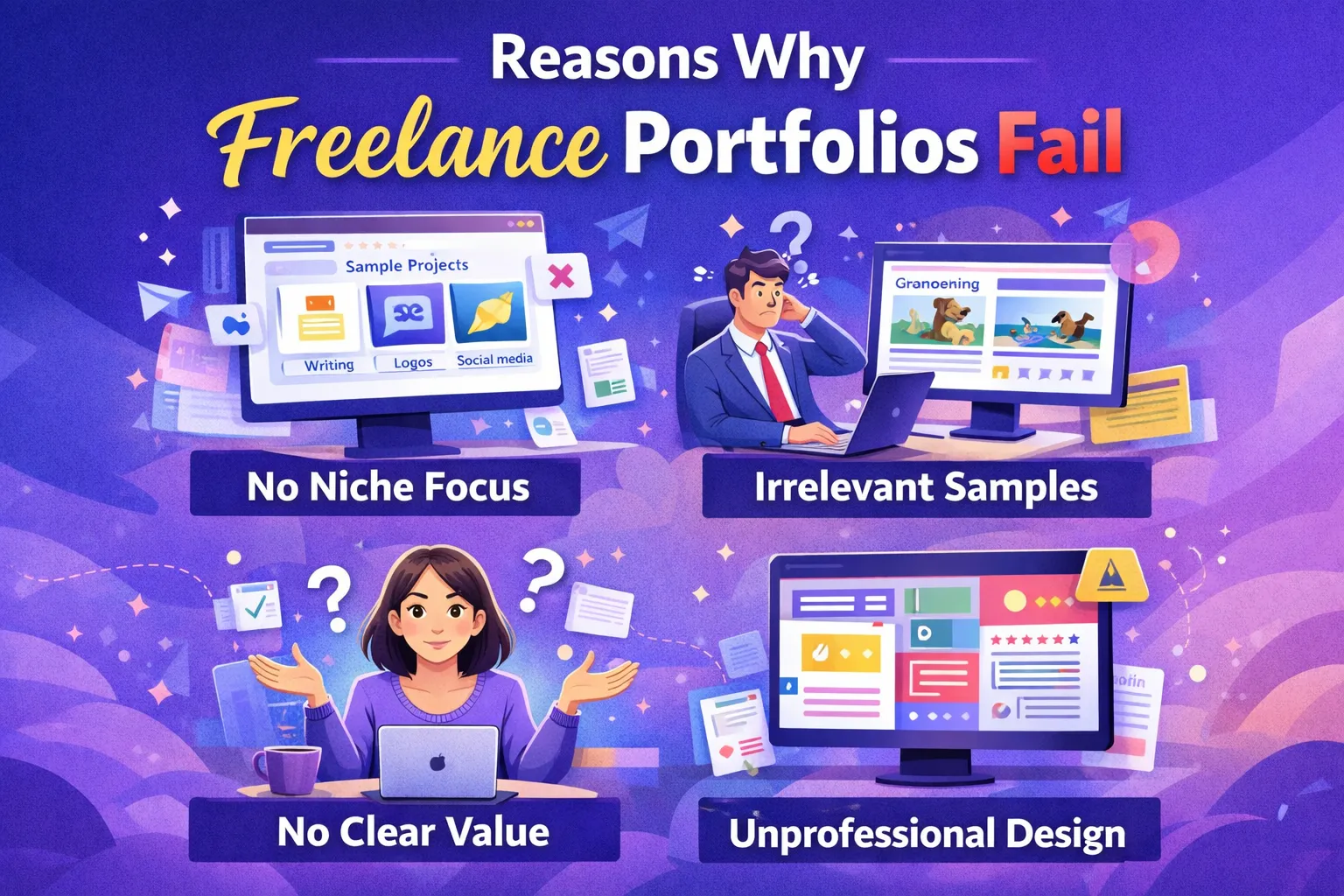
If your portfolio does not immediately communicate clarity, relevance, and trust, the visitor will leave — often within seconds.
This guide is designed to fix that problem permanently.
SEO audit checklist for new websites (step-by-step)What Clients Actually Look For in a Freelance Portfolio
Many freelancers assume clients are impressed by complex tools, fancy animations, or long lists of skills. In reality, clients are far more practical.
A client visiting your portfolio is subconsciously asking:
- Do you understand my industry?
- Have you solved similar problems before?
- Can I trust you with my money?
- Will working with you be easy?
Your portfolio must answer these questions quickly and clearly. Anything that distracts from this goal reduces conversions.
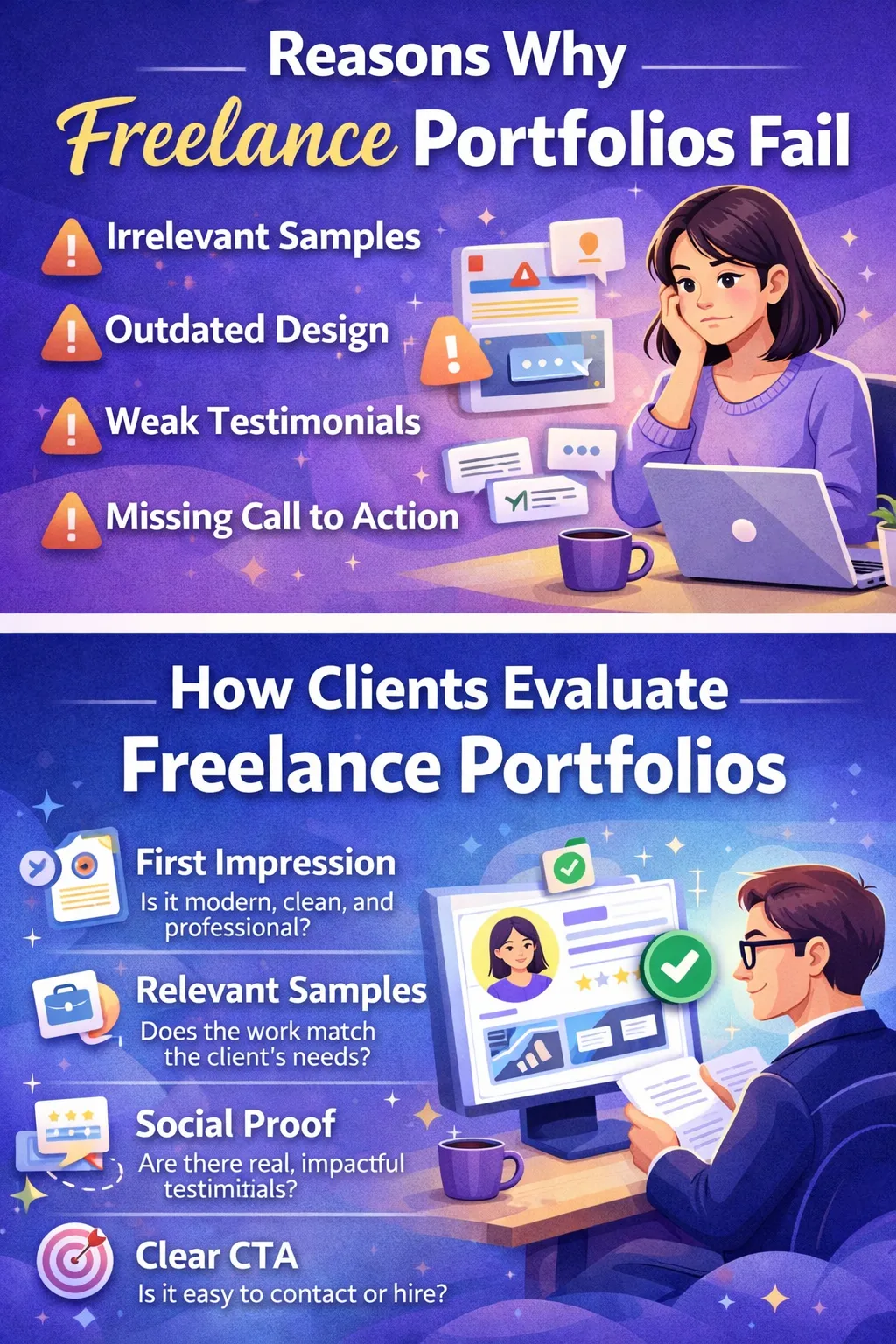
Successful portfolios focus less on self-promotion and more on problem-solution storytelling. They guide the visitor logically from interest to confidence to action.
automate reporting with AIChoosing the Right Portfolio Niche (This Changes Everything)
One of the biggest turning points in a freelancer’s career is specialization. Generalists struggle. Specialists get hired.
A niche does not limit opportunities — it multiplies them. By narrowing your focus, you become instantly more relevant to the right clients.
For example, compare:
- “I am a web developer.”
- “I build fast, SEO-optimized websites for local service businesses.”
The second statement immediately attracts a specific type of client and filters out everyone else — which is exactly what you want.
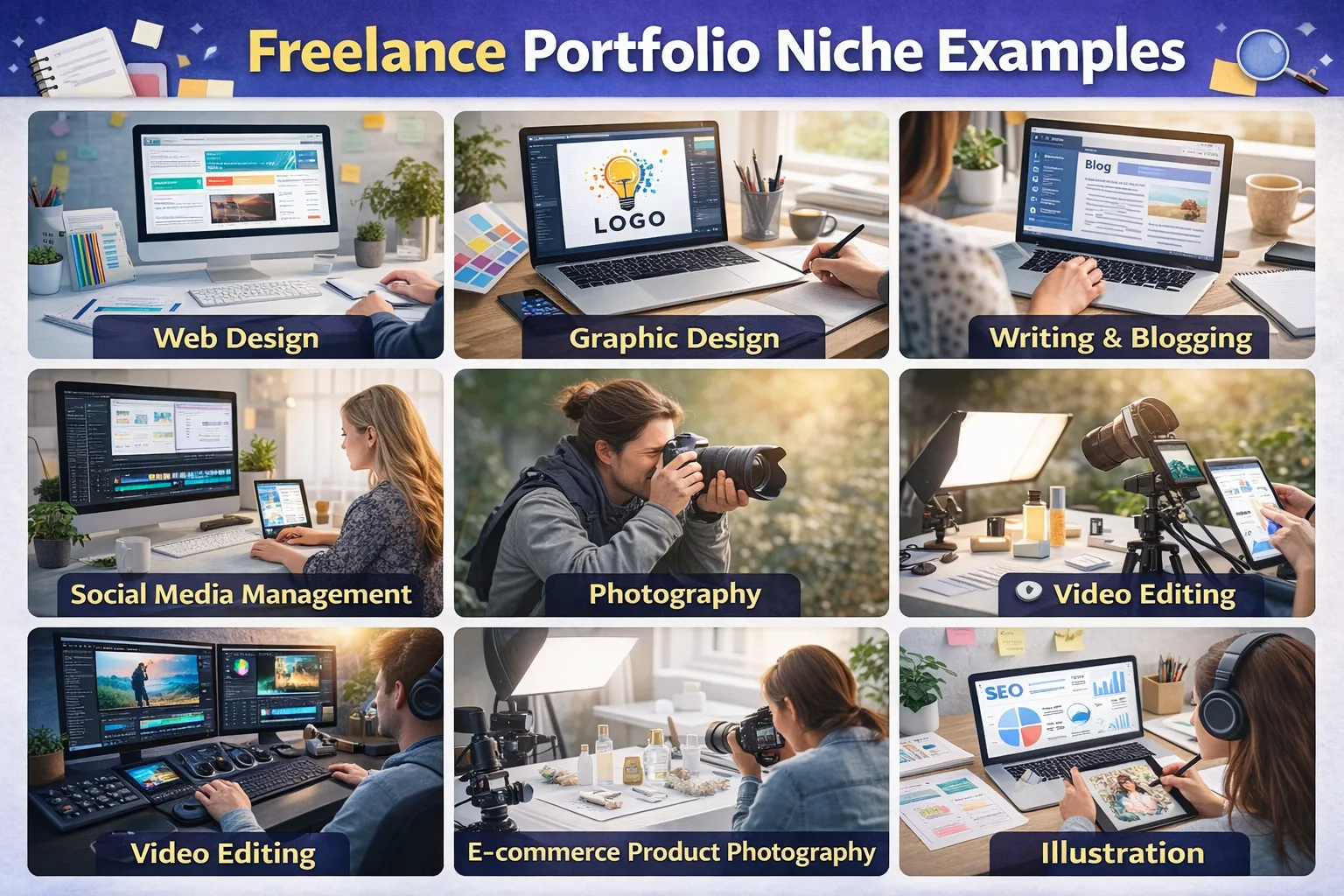
In 2025, low-competition organic traffic also favors niches. Search engines rank focused content higher because it better matches user intent.
how to land your first freelance clientPsychology of Trust: Why Clients Choose One Freelancer Over Another
Expert Insight: After auditing 50+ freelance portfolios, the biggest conversion improvement came from clearer positioning and outcome-focused case studies — not visual redesigns.
Trust is the real currency of freelancing. Clients cannot physically meet you, verify your skills, or guarantee results. Your portfolio must compensate for this uncertainty.
Trust is built using signals:
- Clear explanations instead of buzzwords
- Realistic outcomes instead of exaggerated promises
- Structured case studies instead of random samples
- Professional tone and consistency
Every design choice, word, and layout decision either increases or decreases trust. There is no neutral element.
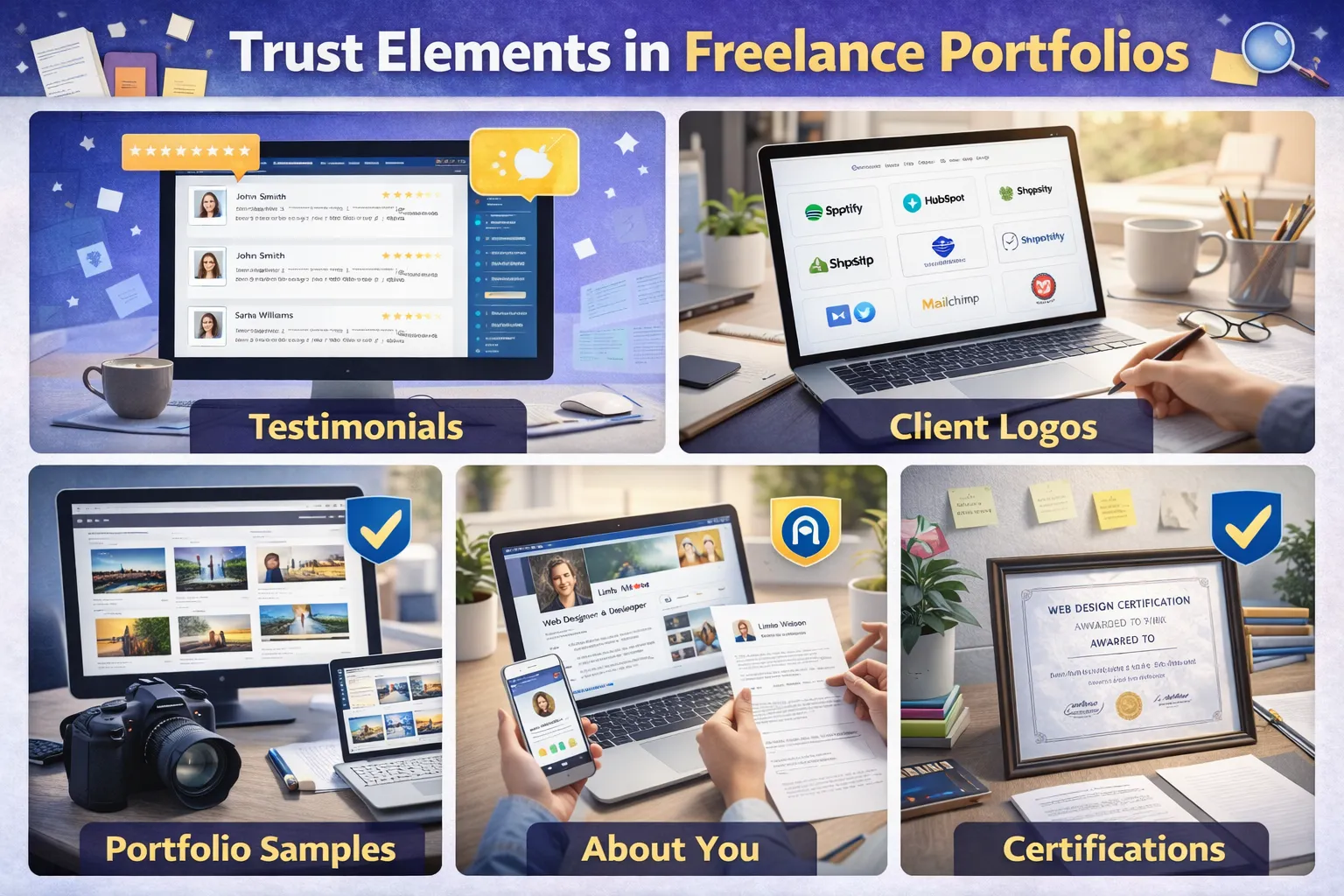
The rest of this guide focuses on deliberately engineering trust into your portfolio — step by step.
SEO and AI content strategy for 2026Best Platforms to Build Your Freelance Portfolio in 2025
Choosing the right platform for your freelance portfolio is not a technical decision — it is a strategic one. The platform you choose affects visibility, trust, SEO, scalability, and how clients perceive your professionalism.
In 2025, clients expect freelancers to have a clean, fast, and accessible online presence. Your portfolio platform must support this expectation without creating unnecessary complexity.
Below are the most effective portfolio platform options, explained in detail.
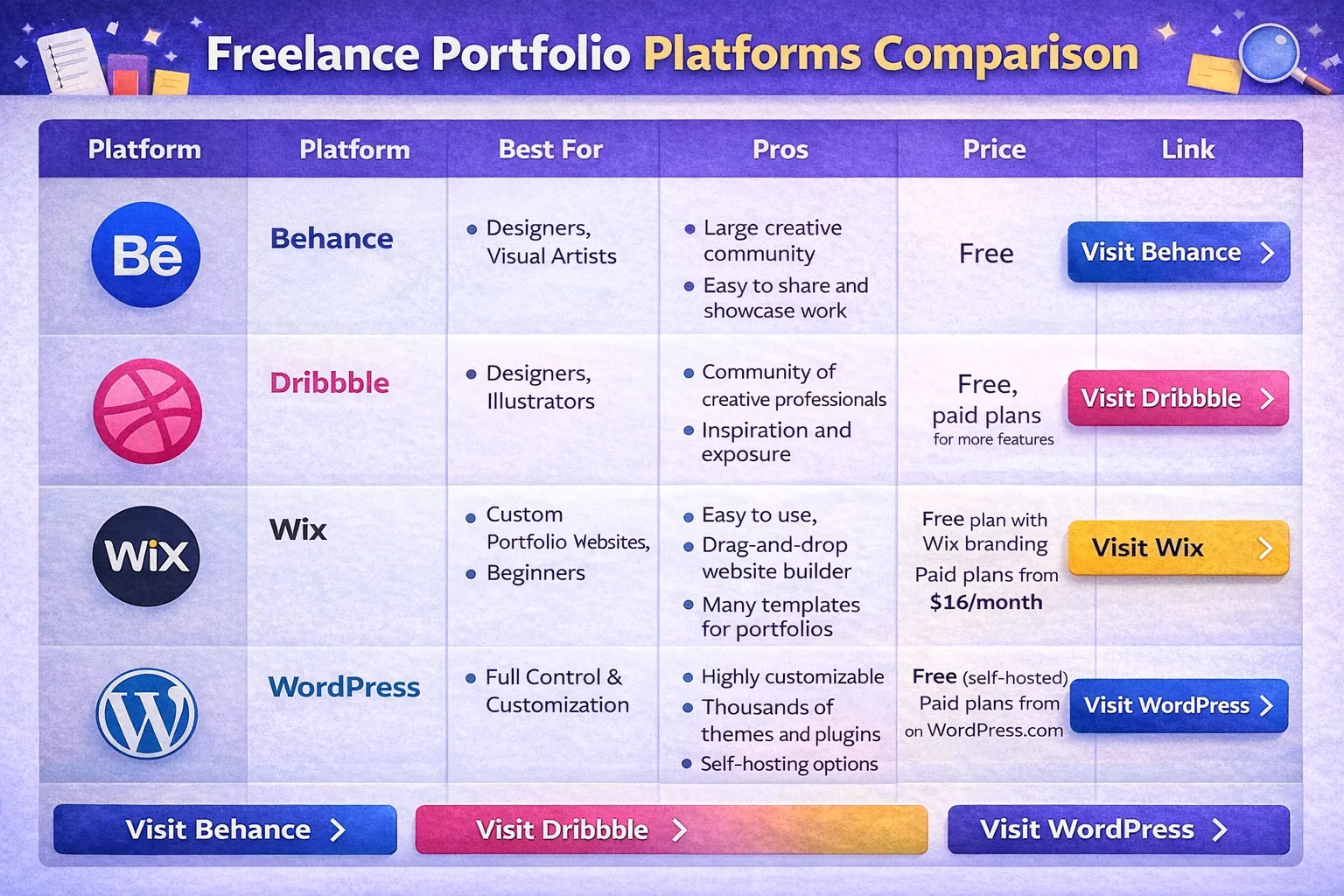
1. Personal Website (Best Long-Term Option)
A personal website remains the most powerful portfolio option for freelancers who want long-term growth, organic traffic, and brand control.
With your own website, you control:
- Content structure and messaging
- SEO optimization and keyword targeting
- Page speed and performance
- Conversion tracking and analytics
Unlike third-party platforms, your website is an asset that grows in value over time. Every blog post, case study, and backlink compounds your authority.
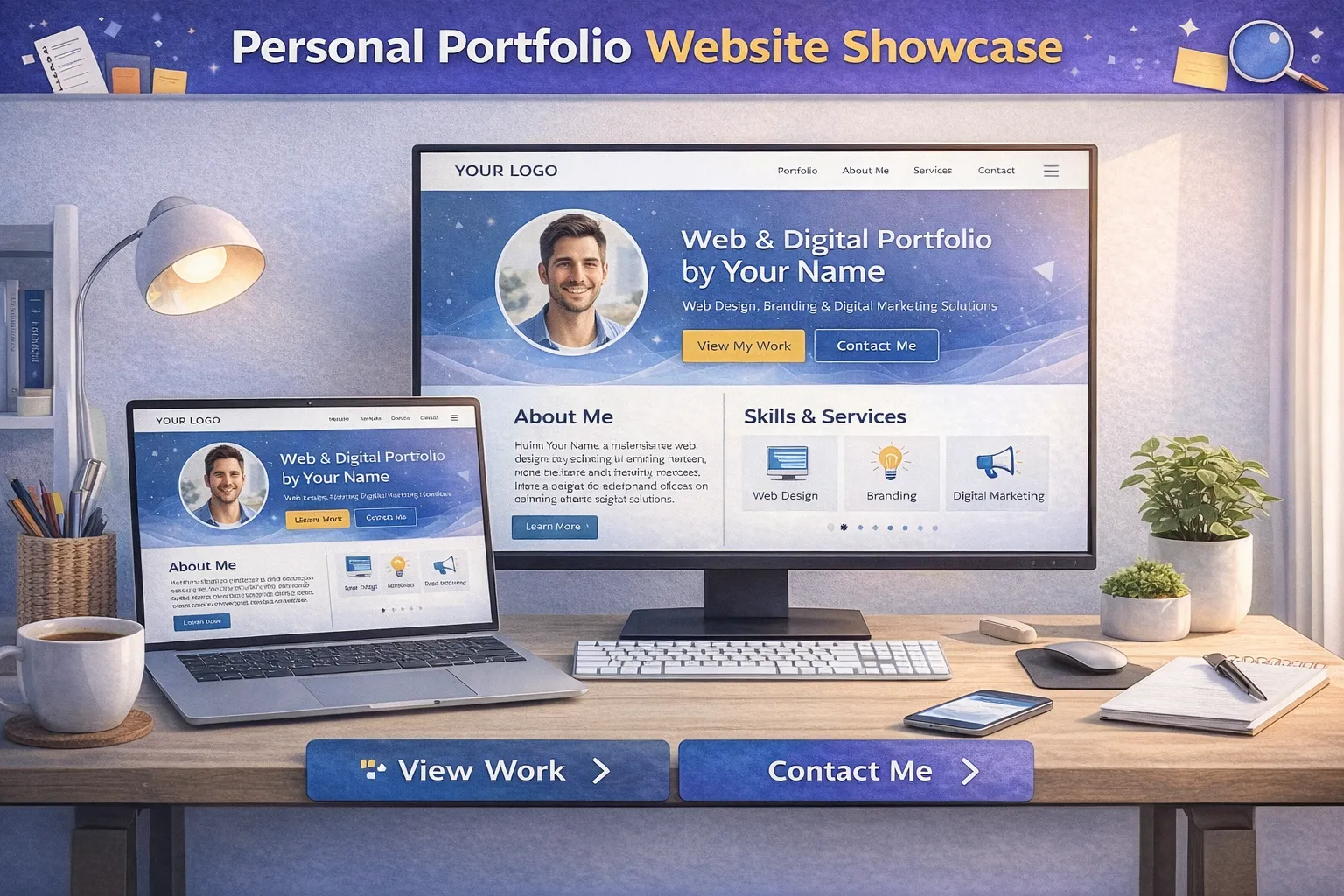
This is why agencies, consultants, and high-earning freelancers almost always invest in their own websites.
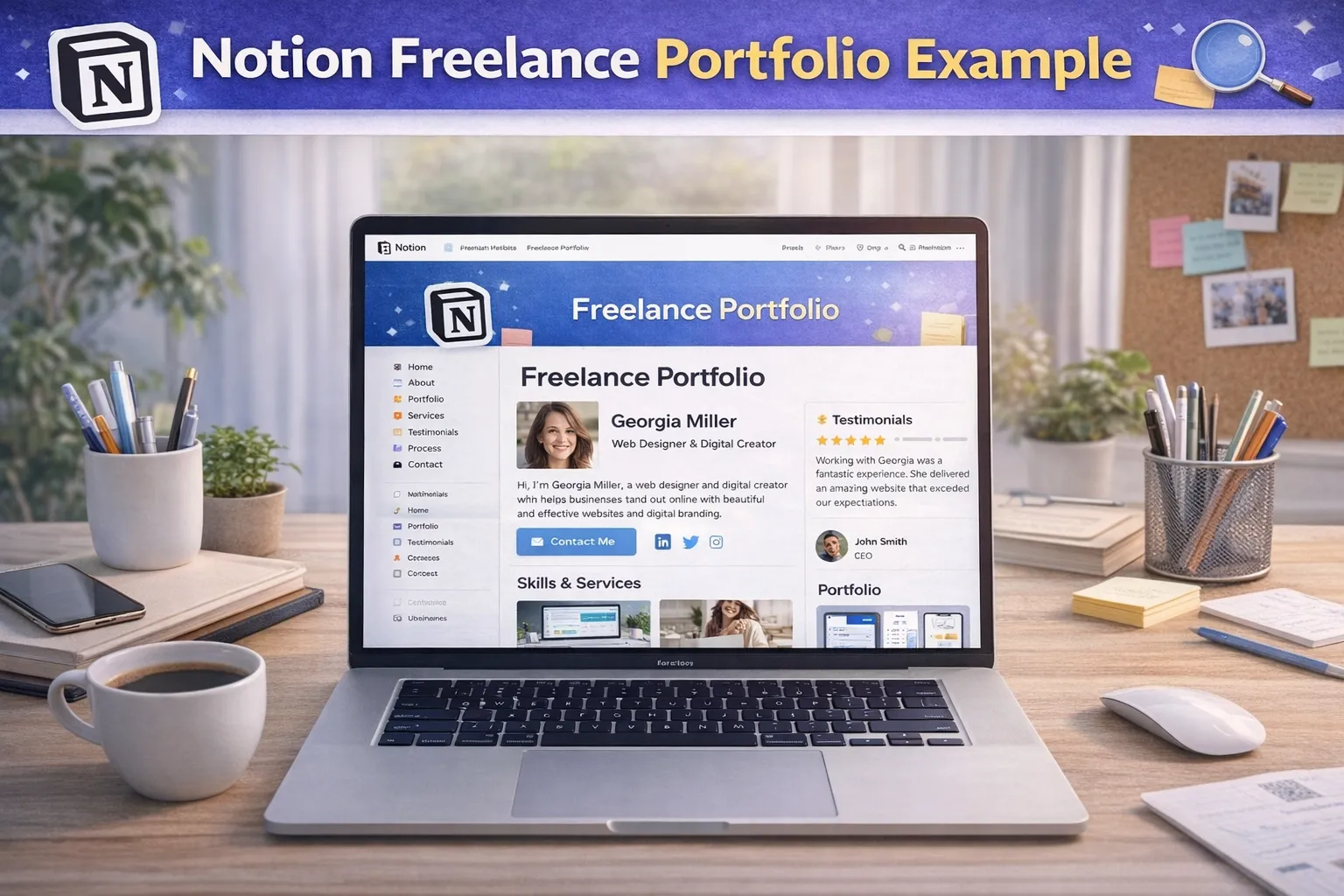
2. Notion + Custom Domain (Fast & Beginner-Friendly)
Notion portfolios have gained popularity because of their simplicity. They are easy to update, visually clean, and require zero development skills.
For beginners, Notion is a practical way to launch quickly without overthinking design. However, there are limitations.
- Limited SEO control
- No advanced analytics
- Restricted customization
Notion works best as a temporary solution or internal portfolio, but serious freelancers eventually outgrow it.
3. Platform-Based Portfolios (Behance, GitHub, Dribbble)
Platform-based portfolios are industry-specific. They work well for visibility but poorly for differentiation.
Examples include:
- Behance / Dribbble for designers
- GitHub for developers
- Medium for writers
These platforms are useful supplements but should not replace your main portfolio. You are competing inside someone else’s ecosystem with limited branding control.
High-Converting Freelance Portfolio Structure (Section by Section)
A freelance portfolio should not be treated as a gallery. It should be treated as a landing page designed to convert visitors into inquiries.
Below is a proven structure that aligns with client psychology and conversion best practices.
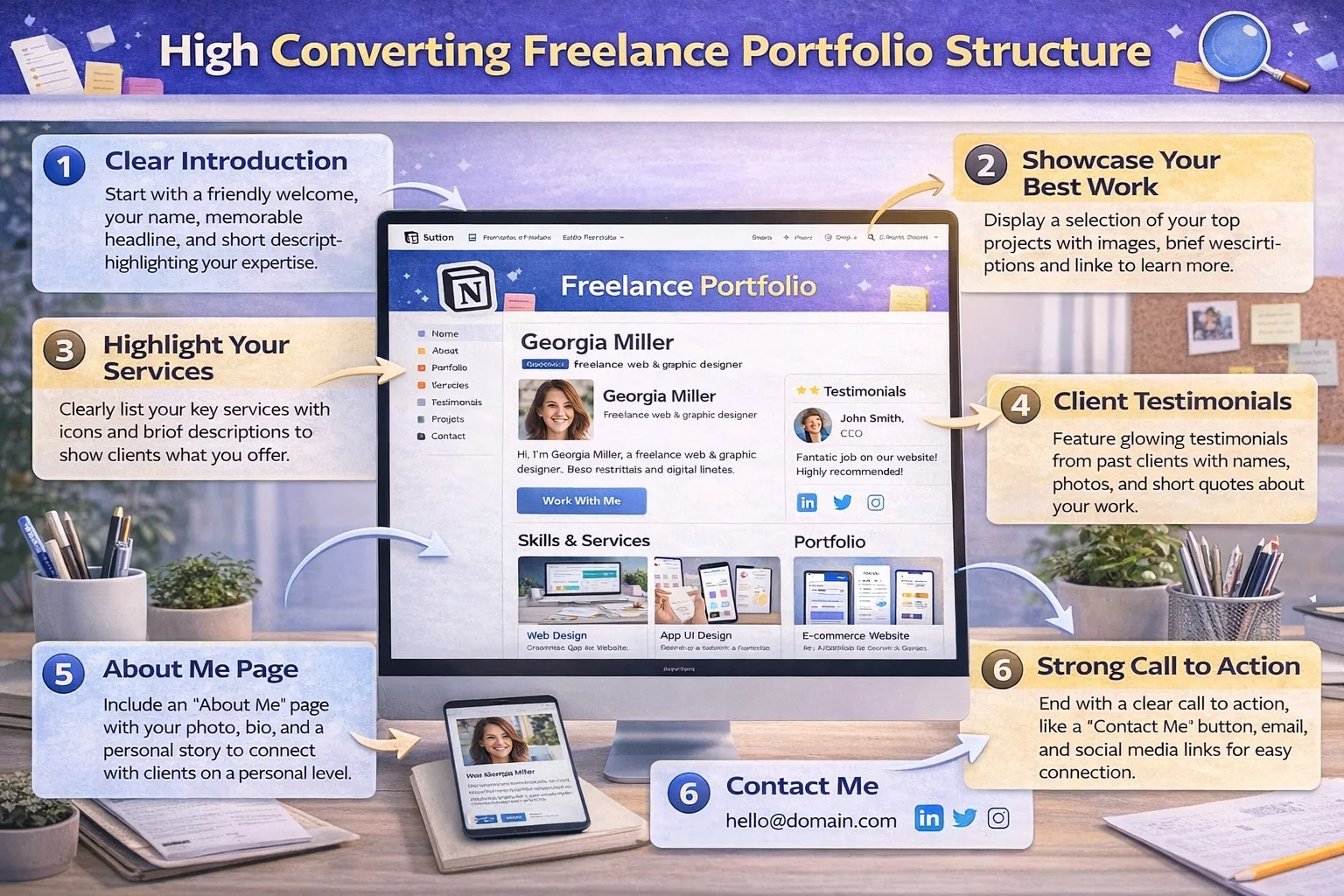
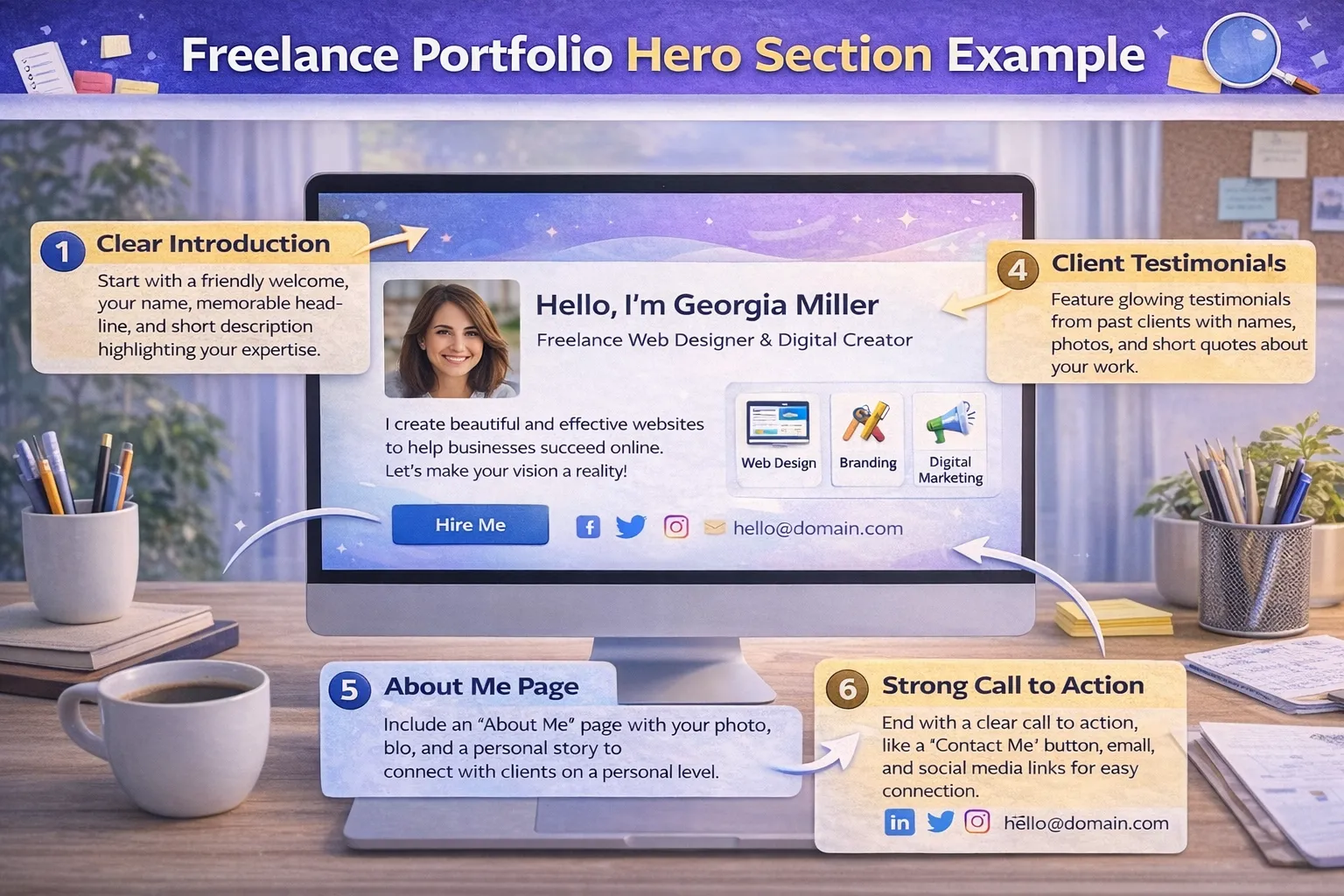
1. Hero Section: Your Value Proposition
The hero section is the most important part of your portfolio. It determines whether a visitor stays or leaves.
Within 5 seconds, your hero section must answer:
- Who you help
- What you help them achieve
- Why you are different
Avoid vague headlines like “Creative Designer” or “Freelance Expert.” Instead, focus on outcomes and relevance.
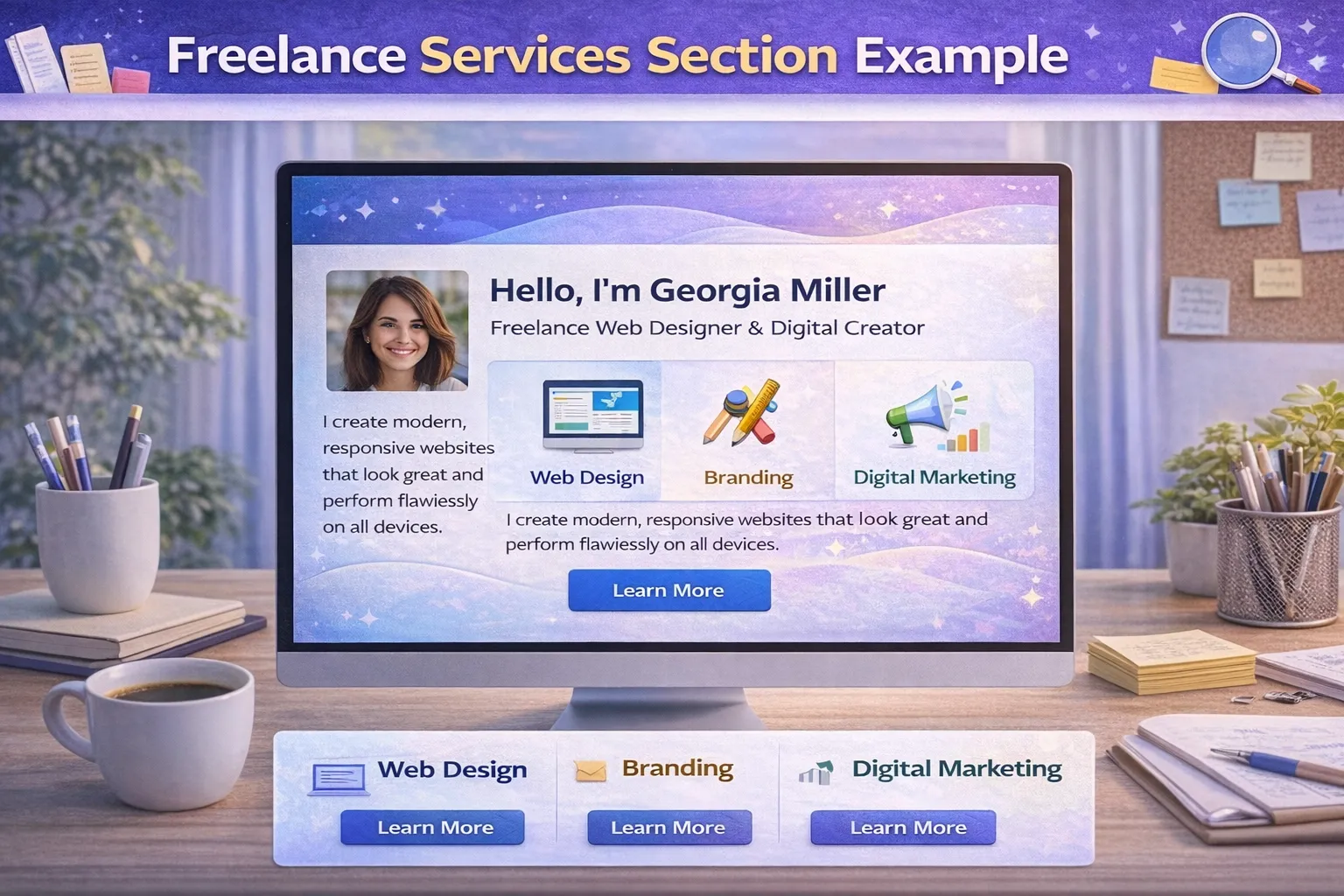
2. Services Section: Clear & Outcome-Focused
Your services section should describe results, not tasks. Clients are not interested in what tools you use — they care about what problem you solve.
Compare:
- “I build websites using HTML and CSS.”
- “I build fast-loading websites that generate leads.”
The second option directly speaks to business value.
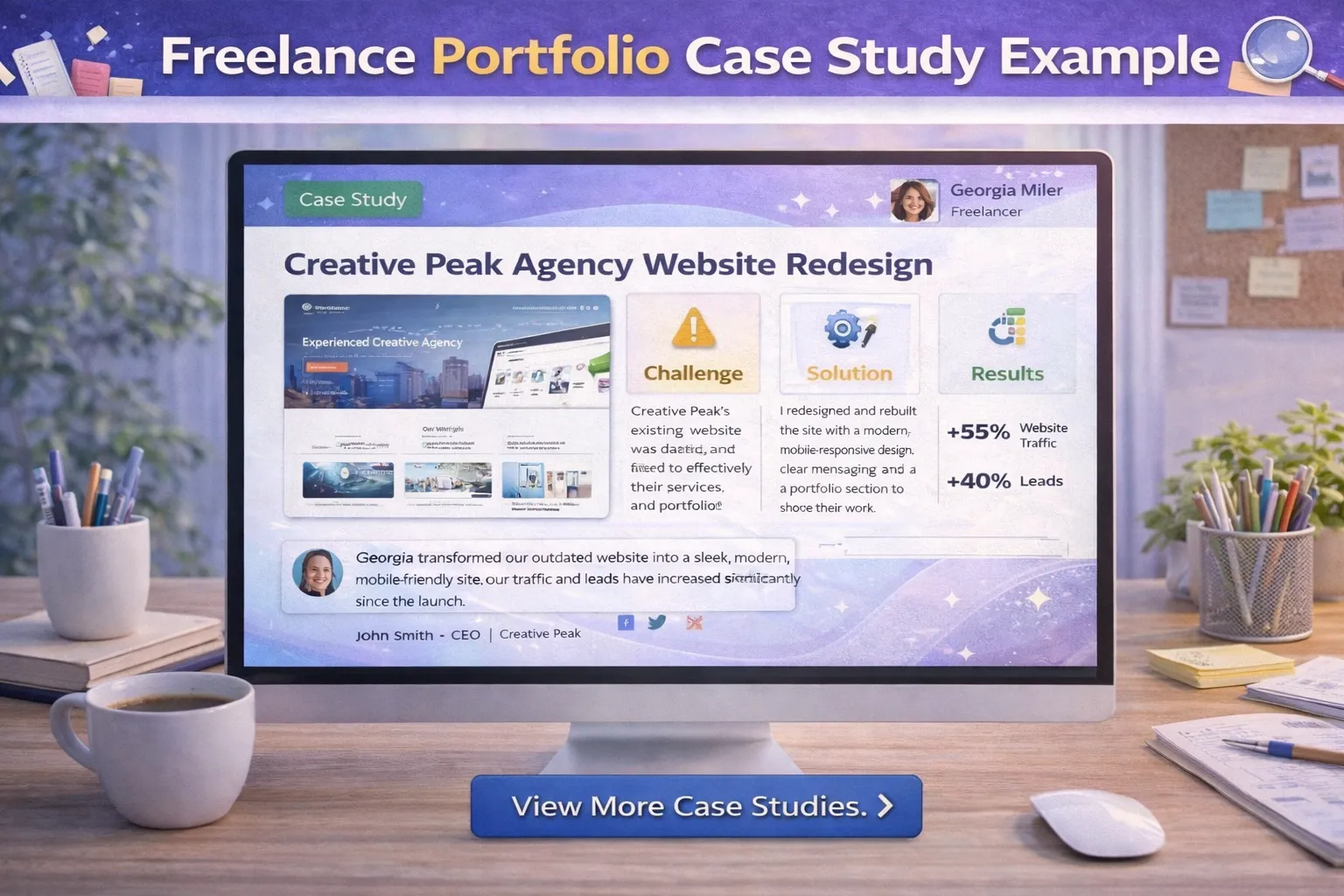
3. Portfolio Projects & Case Studies
This section builds credibility through proof. Projects should be explained, not just displayed.
Each project should include:
- Context (who the project was for)
- Problem (what was broken or missing)
- Solution (what you did)
- Outcome (results or improvements)
Even sample or self-initiated projects are valid if they demonstrate thinking and execution.
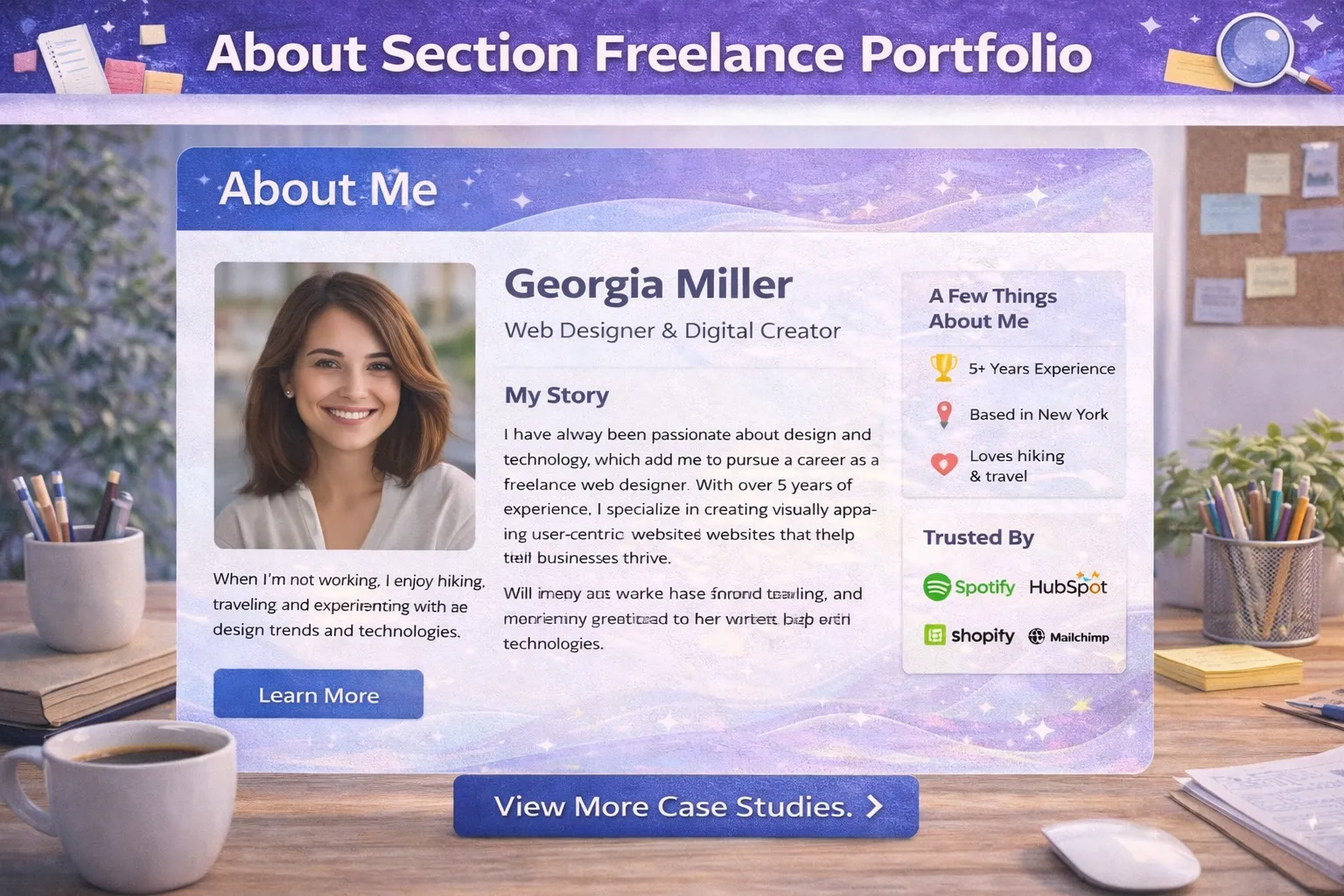
4. About Section: Build Human Connection
Clients hire people, not just skills. Your about section should humanize your portfolio without oversharing.
Focus on:
- Your professional background
- Why you do what you do
- How you approach client work
Avoid long autobiographies. Keep it relevant and client-centered.
5. Call-to-Action (CTA): Make the Next Step Obvious
Many portfolios fail simply because they do not guide the visitor. A clear CTA removes hesitation and friction.
Effective CTAs include:
- Book a free consultation
- Request a quote
- Start a project
CTAs should be visible, simple, and repeated strategically across the page.

How to Build Portfolio Projects Without Real Clients
One of the biggest blockers for beginners is the belief that a portfolio requires real paying clients. This is not true.
In reality, clients care far more about your thinking, execution, and problem-solving ability than whether a project was paid or self-initiated.
Many successful freelancers landed their first clients using sample, personal, or simulated projects.

1. Rebuild an Existing Website or System
One of the strongest portfolio strategies is redesigning or improving an existing product. This could be:
- A poorly optimized website
- An outdated landing page
- A slow-loading blog
- A confusing user flow
You are not claiming ownership — you are demonstrating analysis and improvement.
Explain what was wrong, how you would fix it, and what results you would expect. This shows professional maturity.
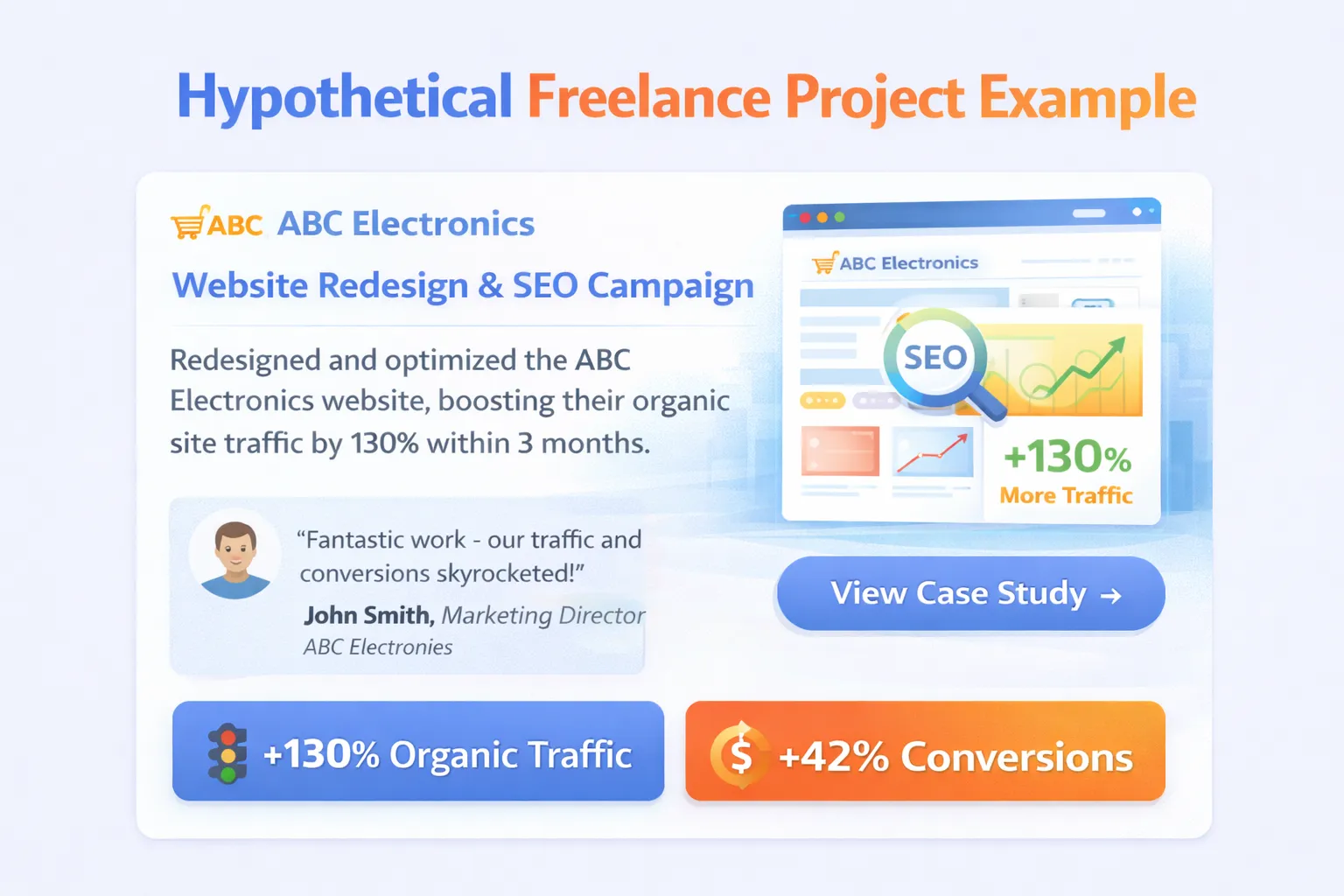
2. Create a Project for a Hypothetical Client
Hypothetical projects are common in design, development, SEO, and marketing portfolios.
For example:
- SEO audit for a local bakery
- Landing page for a SaaS startup
- Content strategy for an online course
The key is realism. Use real constraints, realistic goals, and practical solutions.
3. Turn Learning Projects Into Case Studies
If you have completed courses, certifications, or experiments, you already have portfolio material.
Real portfolio examplesInstead of listing certificates, convert your learning into applied outcomes:
- What you learned
- How you applied it
- What changed as a result
This approach transforms education into evidence.
How to Write Case Studies That Actually Convert Clients
Case studies are the most powerful assets in a freelance portfolio. They move visitors from interest to trust.
However, most freelancers make the mistake of writing case studies like project summaries instead of conversion tools.
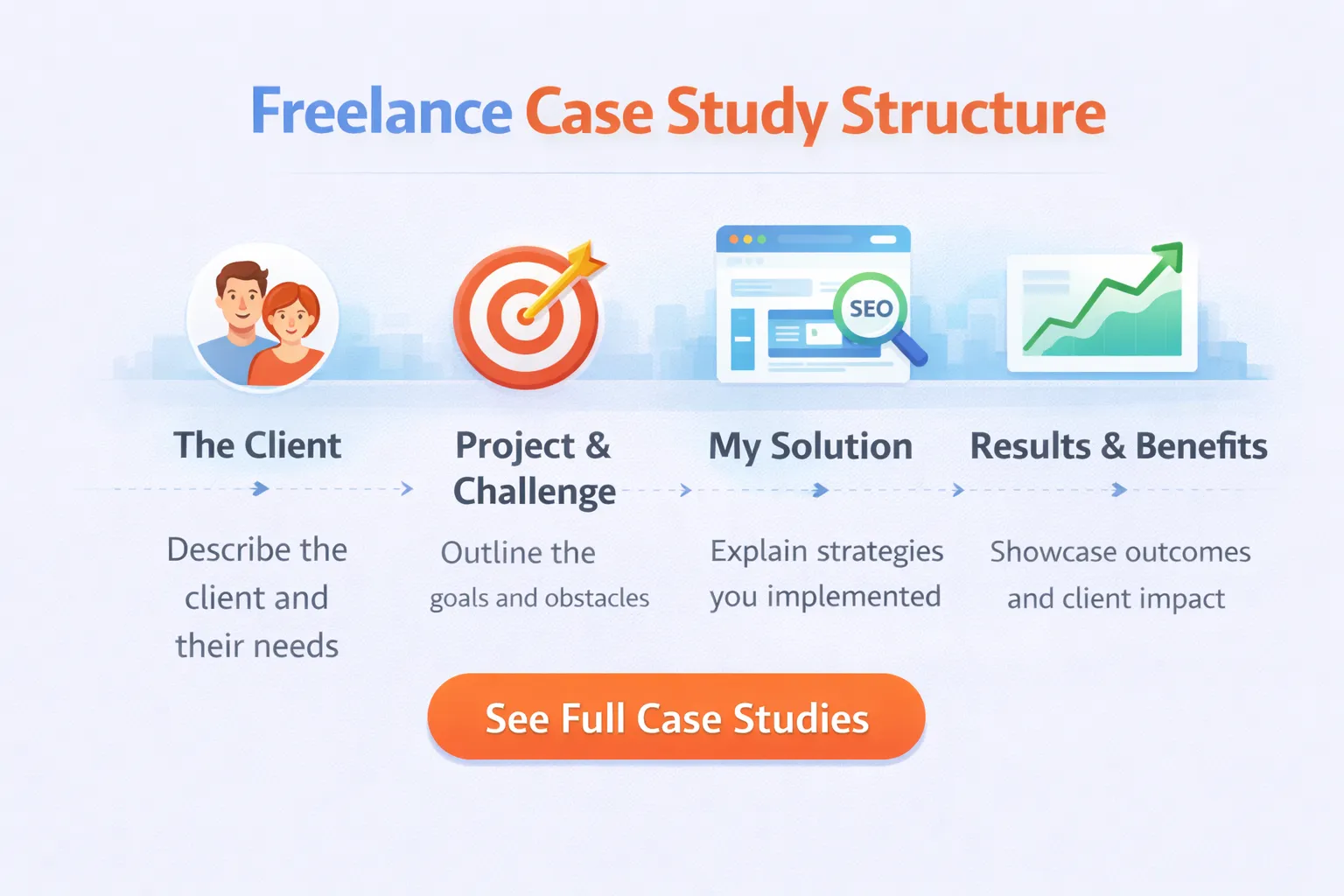
The High-Converting Case Study Framework
Every strong case study follows a clear narrative:
- Background
- Problem
- Strategy
- Execution
- Outcome
1. Background
Explain who the project was for and why it mattered. Provide context so the reader understands relevance.
2. Problem
Clearly articulate the challenge. This allows the reader to mentally relate their own problem to the scenario.
3. Strategy
Describe how you approached the problem. This section demonstrates your thinking, not just your skills.
4. Execution
Explain what you actually did. Be specific but concise.
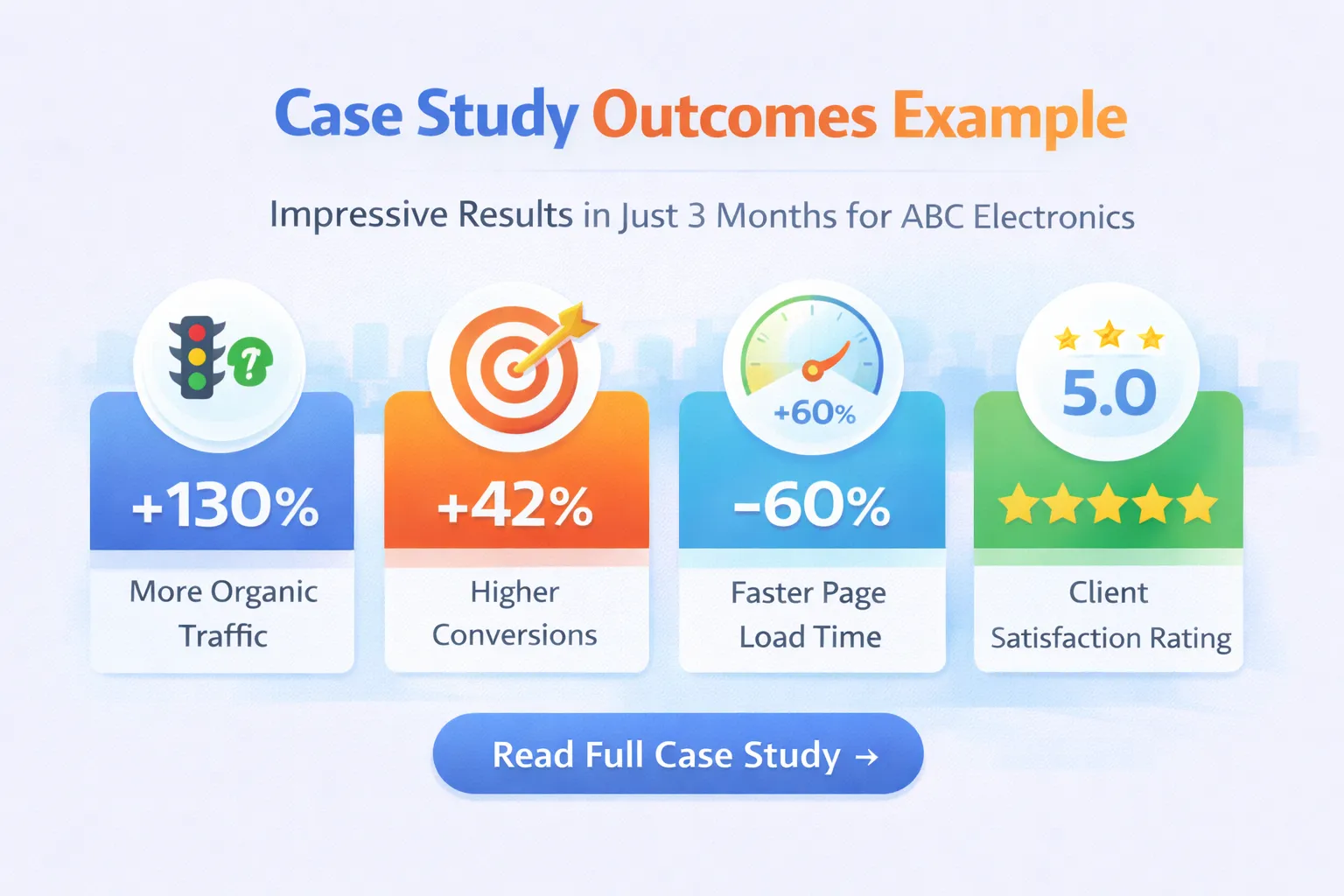
5. Outcome
Results do not have to be financial. They can include:
- Improved speed
- Better usability
- Clearer messaging
- Increased engagement
Honesty builds trust more than exaggerated claims.
SEO for Freelance Portfolios (Low-Competition Strategy)
SEO is one of the most overlooked growth channels for freelancers. Most portfolios rely solely on outreach or platforms, ignoring organic traffic entirely.
This creates an opportunity.
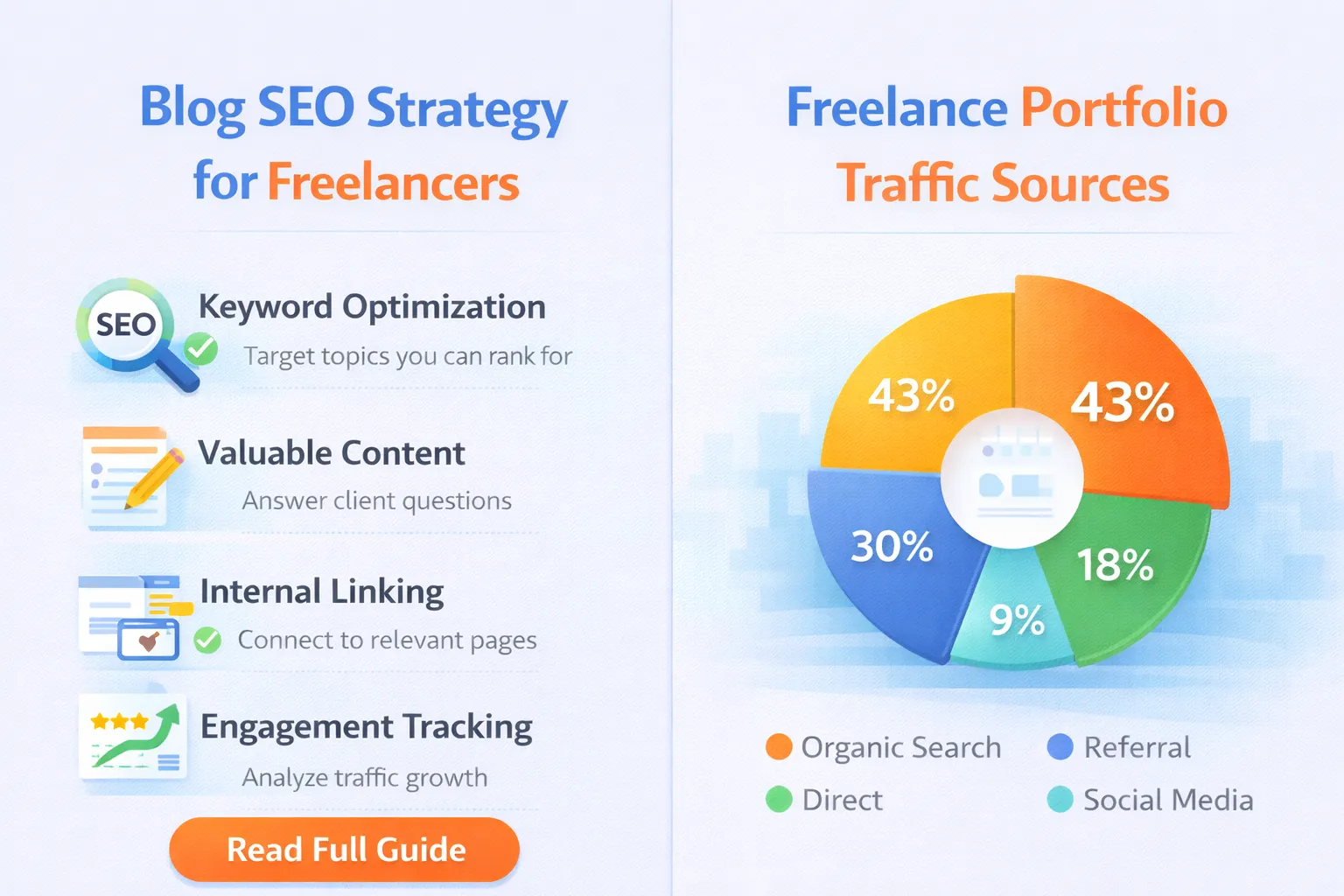
1. Target Service + Location Keywords
Instead of competing for broad terms, focus on intent-driven keywords:
- SEO consultant for small businesses
- Freelance web designer for startups
- AI automation freelancer
These keywords convert better and are easier to rank for.
2. Create Supporting Blog Content
Blogs are not just for traffic — they establish expertise.
Examples:
- How I optimized a website for Core Web Vitals
- SEO audit checklist for new websites
- How to automate reporting for clients
Each article reinforces your service pages.
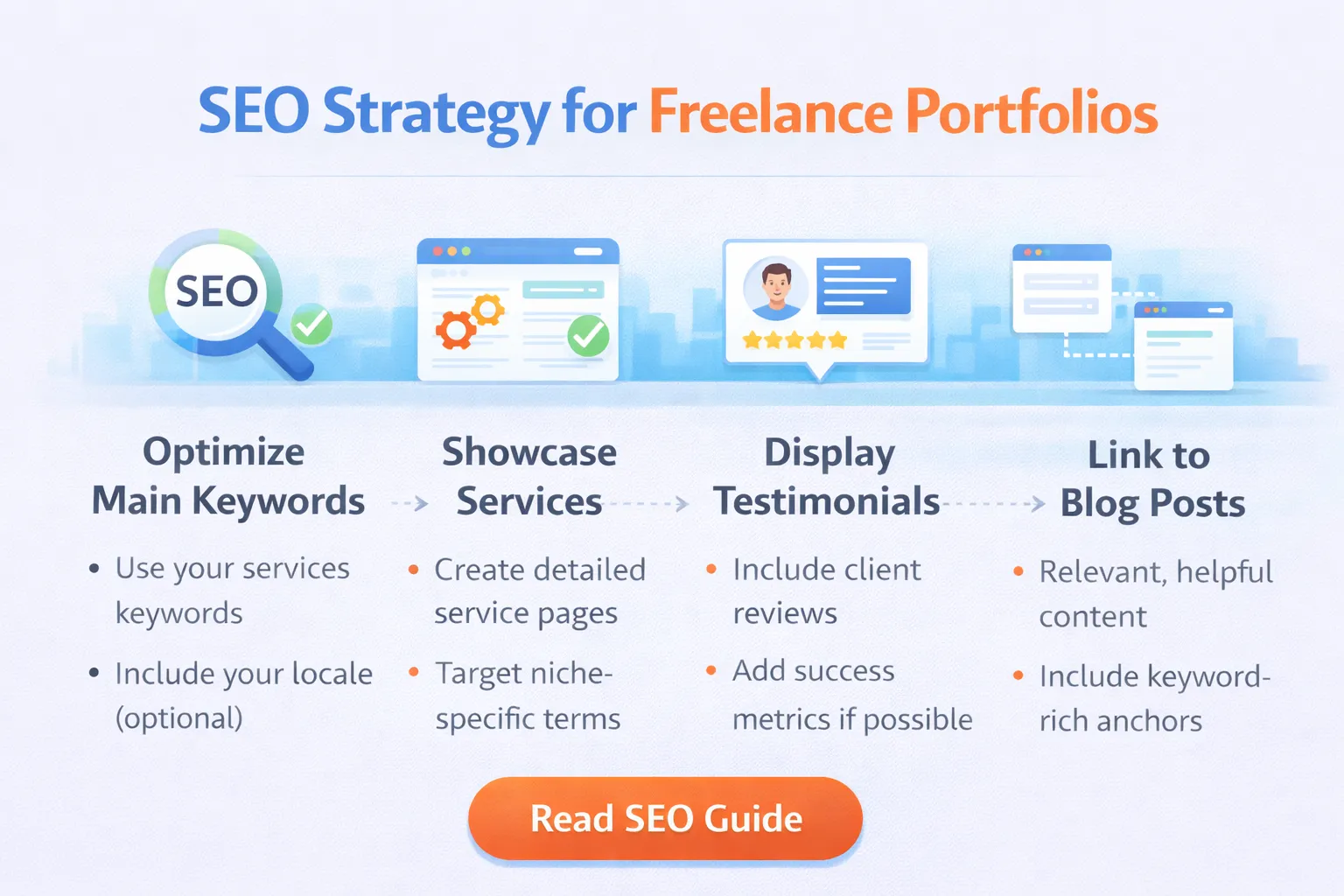
3. Internal Linking Matters
Internal links guide both users and search engines. Link your blog posts to:
- Service pages
- Case studies
- Contact page
This strengthens topical authority and improves rankings.
How to Drive Traffic to Your Portfolio
A great portfolio is useless without visibility. Traffic strategies should be intentional and repeatable.
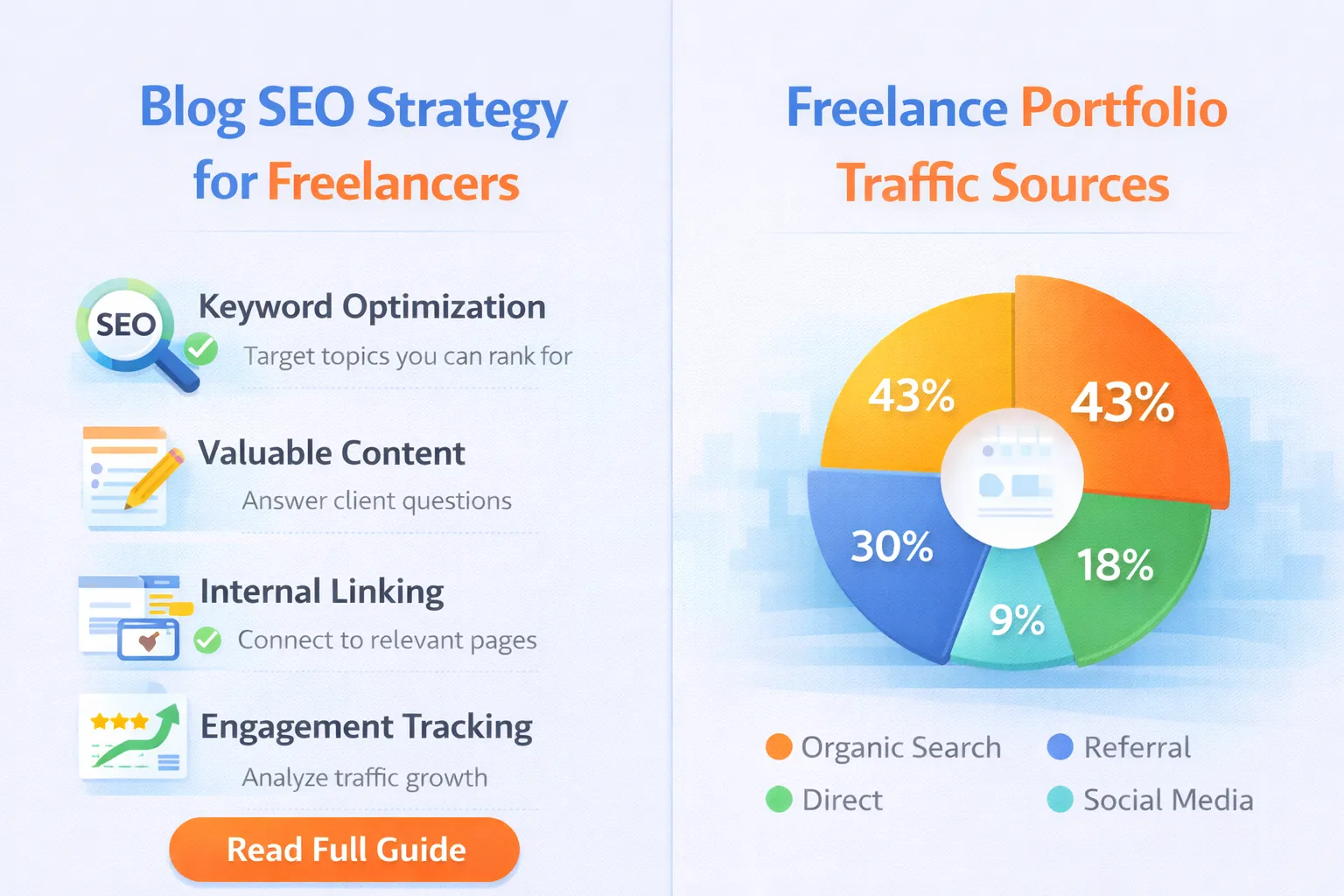
1. Organic Search (SEO)
SEO compounds over time. One well-ranked article can generate leads for years.
2. LinkedIn Content
Sharing case studies, lessons, and insights positions you as a practitioner, not a job seeker.
3. Direct Outreach With Context
Outreach works best when combined with portfolio proof. Instead of pitching blindly, link to relevant case studies.
4. Communities & Forums
Answering real questions on platforms like Reddit or niche forums can drive highly targeted traffic.
Common Freelance Portfolio Mistakes to Avoid
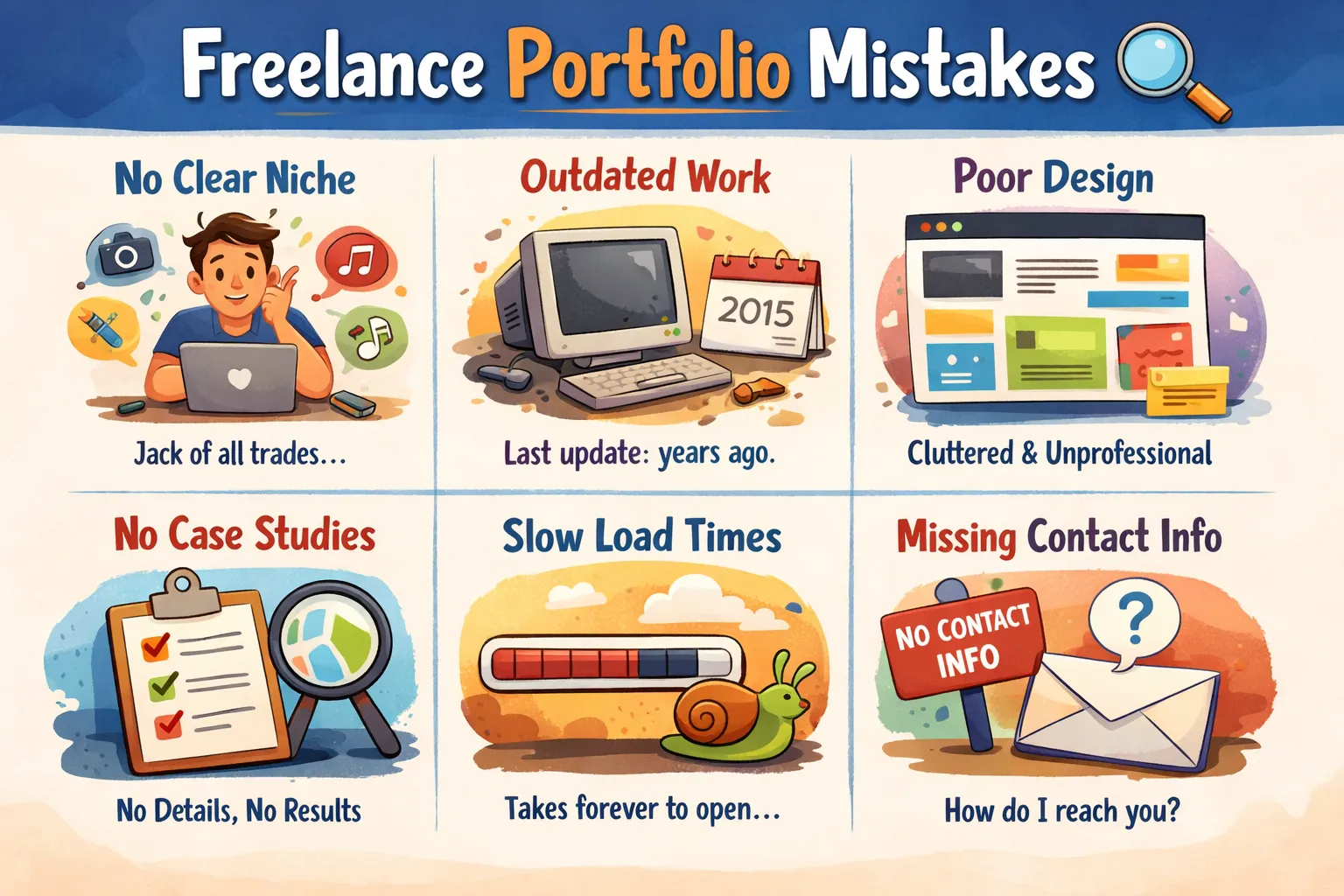
- Overloading with tools instead of outcomes
- No clear call-to-action
- Weak or generic headlines
- No proof or explanation
- Ignoring SEO completely
Avoiding these mistakes instantly puts you ahead of most freelancers.
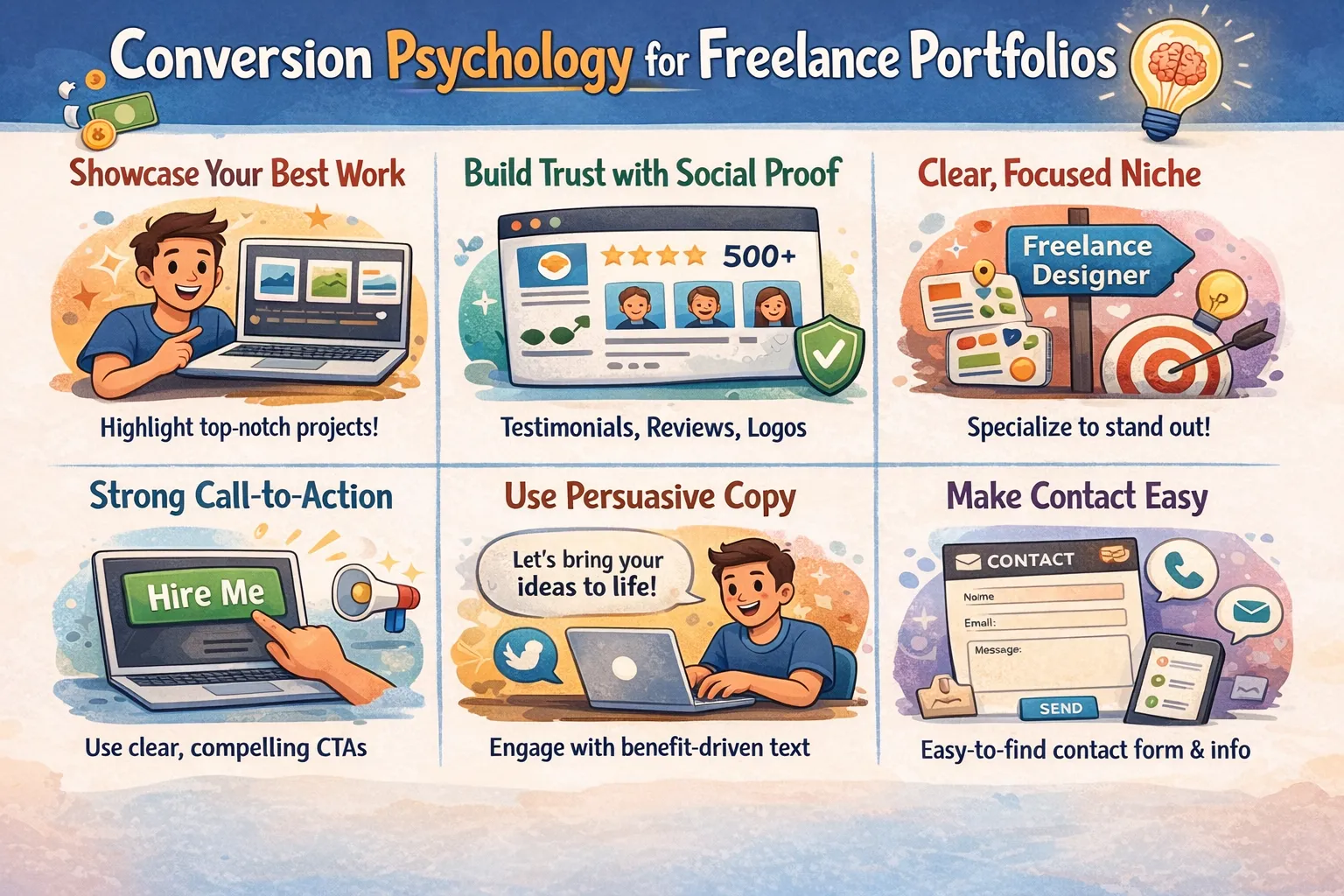
Advanced Conversion Psychology for Freelance Portfolios
A portfolio is not just a showcase — it is a persuasion system. Every element should reduce doubt, increase trust, and guide action.
Understanding basic conversion psychology gives you a massive advantage over freelancers who rely only on visuals or credentials.
1. Reduce Cognitive Load
Visitors should never feel confused or overwhelmed. Too many sections, fonts, or messages increase friction.
Use:
- Short paragraphs
- Clear headings
- Consistent layout
Simplicity builds confidence.
2. Social Proof Without Testimonials
Even without testimonials, you can demonstrate credibility through:
- Detailed case studies
- Transparent process explanations
- Before/after comparisons
Clients trust evidence more than praise.
3. Authority Through Education
Teaching builds authority. When your portfolio educates, it positions you as a guide, not a vendor.
This is why blogs, audits, and walkthroughs convert better than galleries.
How to Present Pricing Without Scaring Clients Away
Pricing is one of the most misunderstood parts of a freelance portfolio. Many freelancers hide pricing entirely or display numbers without context.
Both approaches create friction.
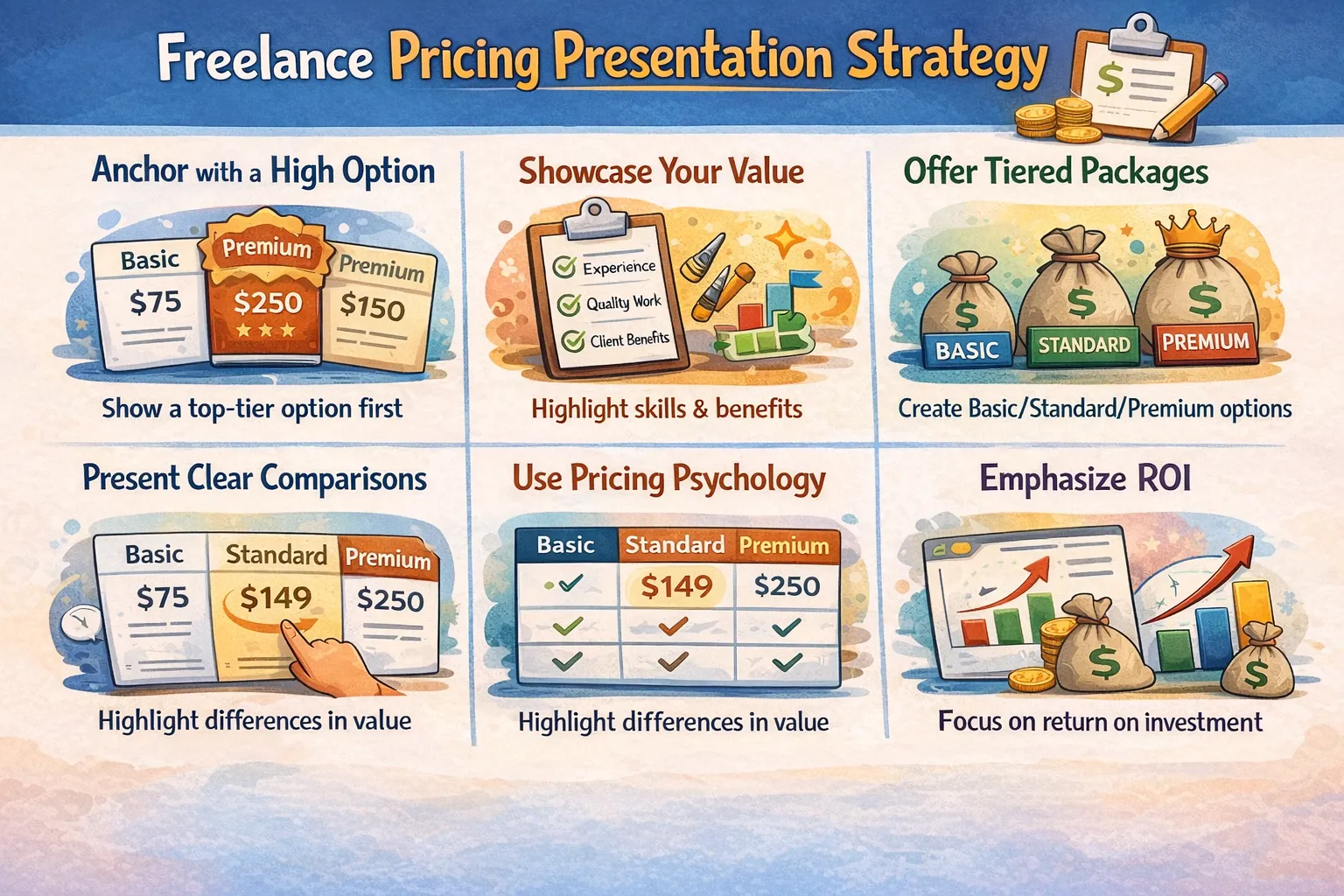
1. Use Starting Prices
Starting prices filter unserious inquiries while remaining flexible.
Example:
- Website Optimization — starting at $500
- SEO Audit — starting at $300
2. Price Outcomes, Not Hours
Clients care about results, not time. Frame pricing around value delivered.
This positions you as a solution provider rather than a task worker.
3. Offer a Discovery Call
A free consultation reduces commitment anxiety and increases conversions.
It also allows you to qualify clients before investing time.
Frequently Asked Questions (FAQs)
1. Do I need real clients to build a portfolio?
No. Sample, hypothetical, and learning-based projects are valid if explained properly.
2. How many projects should I include?
3–6 well-explained projects outperform 20 shallow ones.
3. Should I include pricing on my portfolio?
Yes, but use starting prices or ranges to remain flexible.
4. Is a personal website better than platforms?
Yes. A personal website gives you SEO control, branding, and long-term growth.
5. How long should a case study be?
Long enough to explain thinking, process, and outcomes clearly.
6. Do blogs really help freelancers get clients?
Yes. Blogs build authority, trust, and organic inbound leads.
7. What is the biggest portfolio mistake?
Focusing on tools instead of outcomes.
8. How often should I update my portfolio?
Quarterly updates keep it relevant and accurate.
9. Should I niche my portfolio?
Yes. Niches reduce competition and increase conversion rates.
10. Can SEO really work for freelance portfolios?
Yes. Low-competition service keywords convert extremely well.
11. Do testimonials matter?
They help, but case studies and clarity matter more.
12. How important is page speed?
Critical. Slow portfolios lose trust instantly.
13. Should I show my process?
Yes. Transparency builds confidence.
14. What CTA works best?
“Book a free consultation” consistently outperforms others.
15. Is a portfolio ever finished?
No. It evolves with your skills and positioning.
Final Thoughts: Your Portfolio Is a Business Asset
freelance SEO & portfolio optimization servicesA high-performing freelance portfolio is not about design trends or tools. It is about clarity, trust, and intentional positioning.
By focusing on:
- Clear value propositions
- Realistic projects
- Educational content
- SEO-driven visibility
You transform your portfolio from a static page into a lead-generating asset.
Start simple, iterate intentionally, and treat your portfolio as the foundation of your freelance business.