Google Search Update — Impact, Analysis, & SEO Strategies
Author: Hassan | Date: 26 Nov 2025
Introduction
Google updates its search algorithms multiple times per year, and core updates can significantly impact website rankings. This guide dives deep into the latest update, its impact, and actionable strategies to maintain and improve SEO performance.
Overview of the Google Update
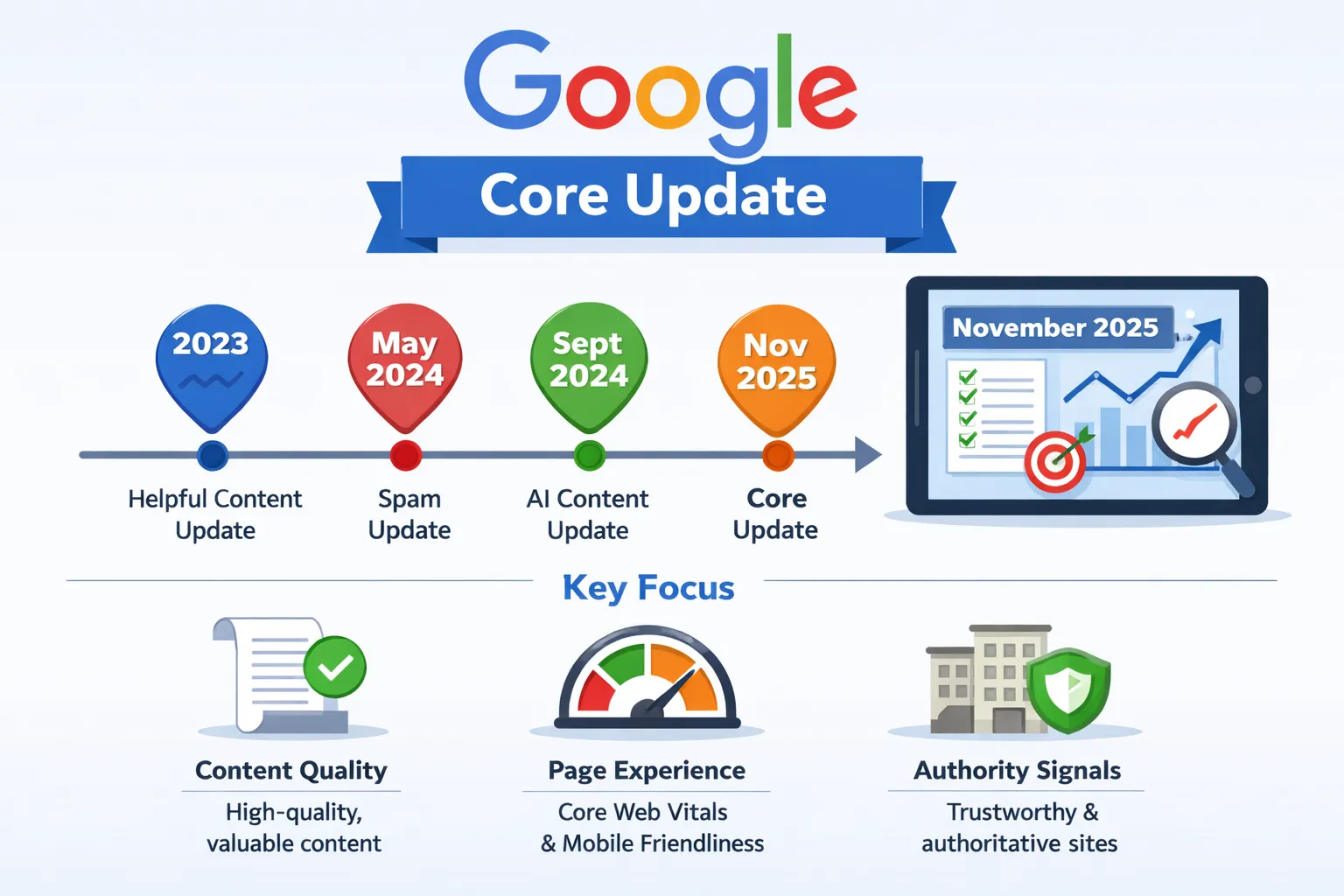
The latest Google core update, released in November 2025, focuses on improving search relevance, rewarding high-quality content, and evaluating page experience more effectively.
- Update Name: Google November 2025 Core Update
- Primary Focus: Content quality, page experience, and authority signals
- Impact: Ranking fluctuations observed across multiple industries
- Google Resources: Official Google Search Blog
Impact on Websites & Industries
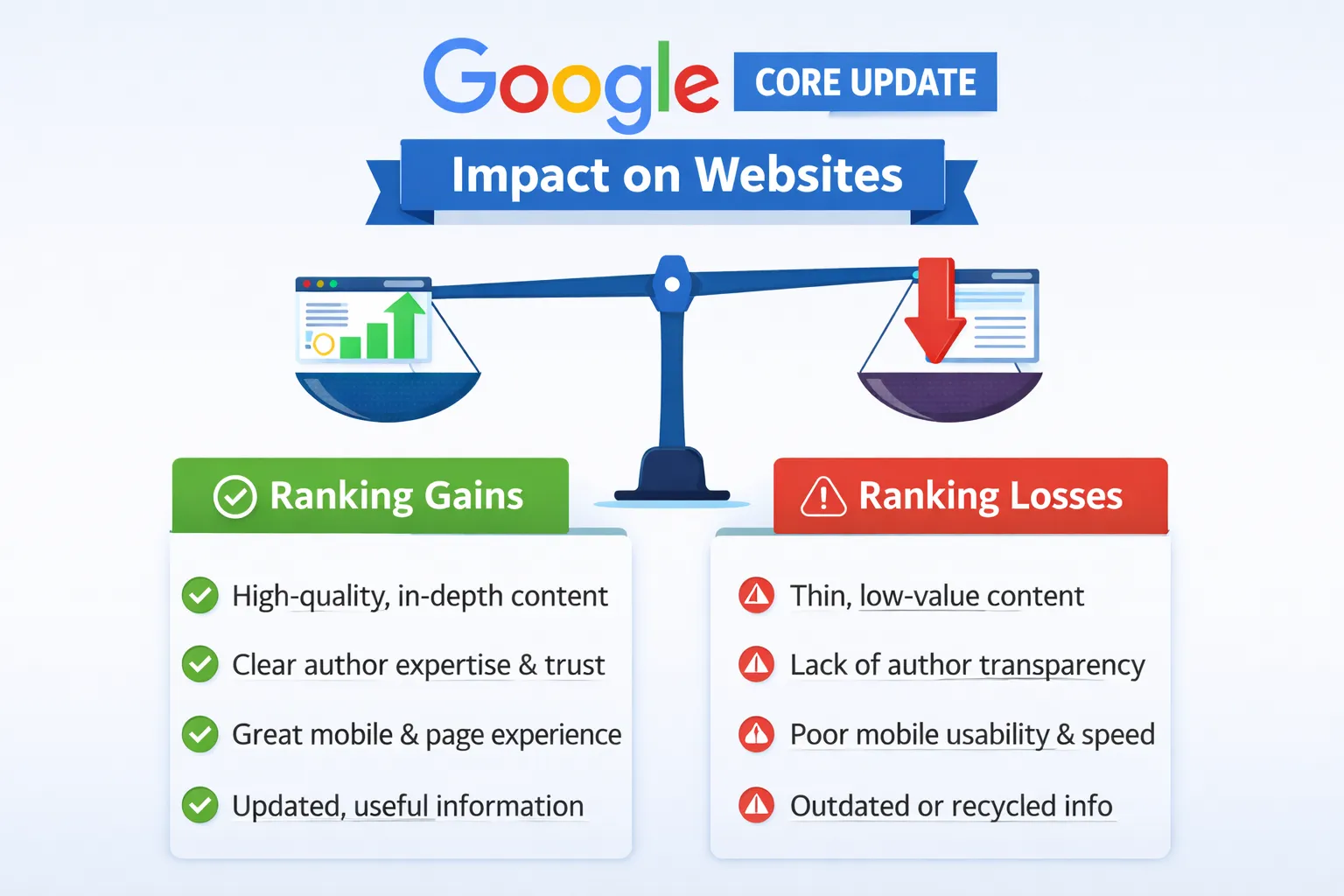
Core updates affect websites differently depending on content quality, user experience, and backlink profiles.
1. Industries Most Affected
- Health & Medical Websites — E-A-T (Expertise, Authoritativeness, Trustworthiness) emphasized
- Finance & Investment — content accuracy and credibility critical
- News & Media — fresh and well-structured content preferred
- Small Business Blogs — minor ranking drops if content is thin
2. Ranking Fluctuations
Websites may see:
- Ranking gains for authoritative, well-optimized pages
- Ranking drops for low-quality, thin, or duplicate content
- Traffic volatility for medium authority websites
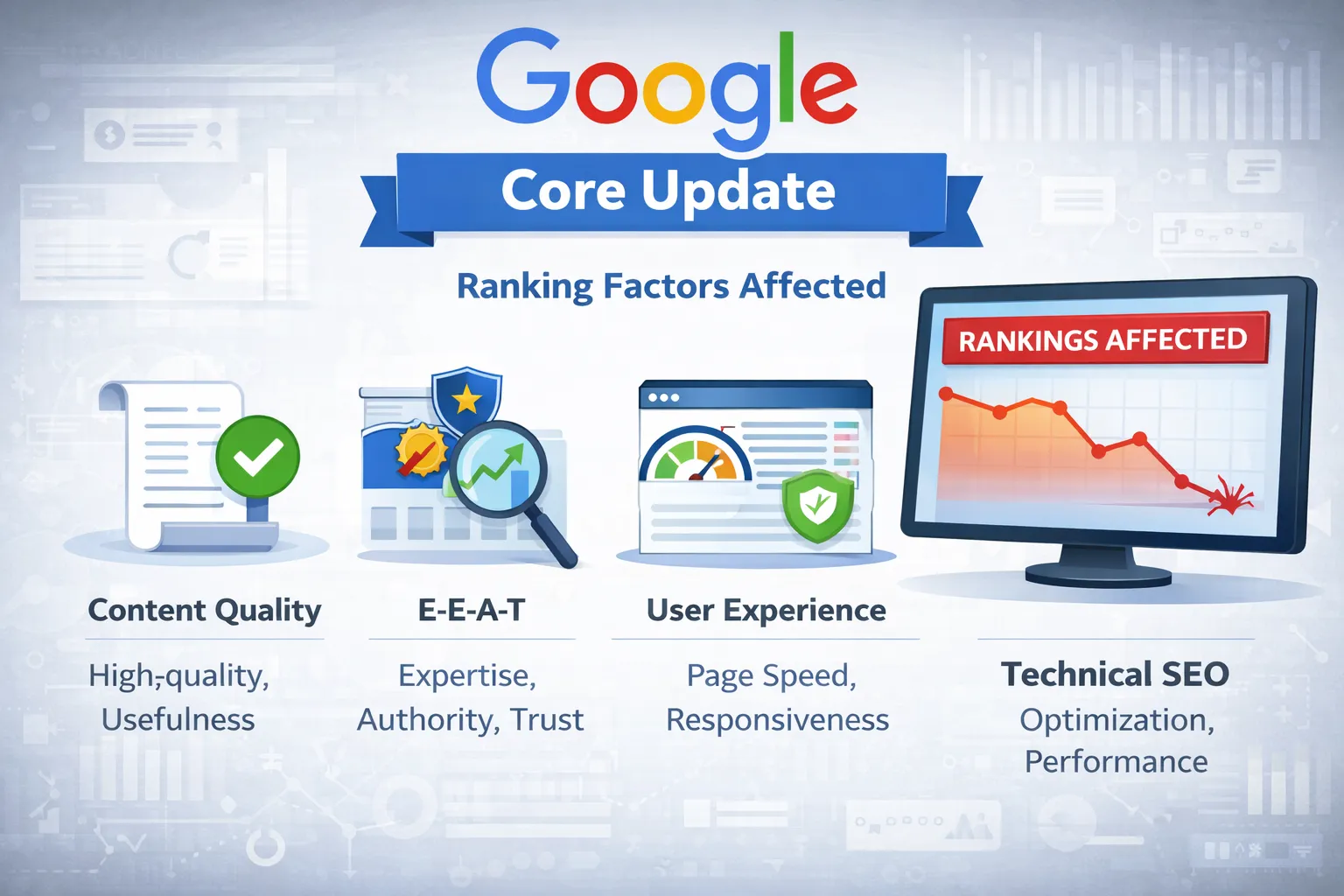
Ranking Factors Affected
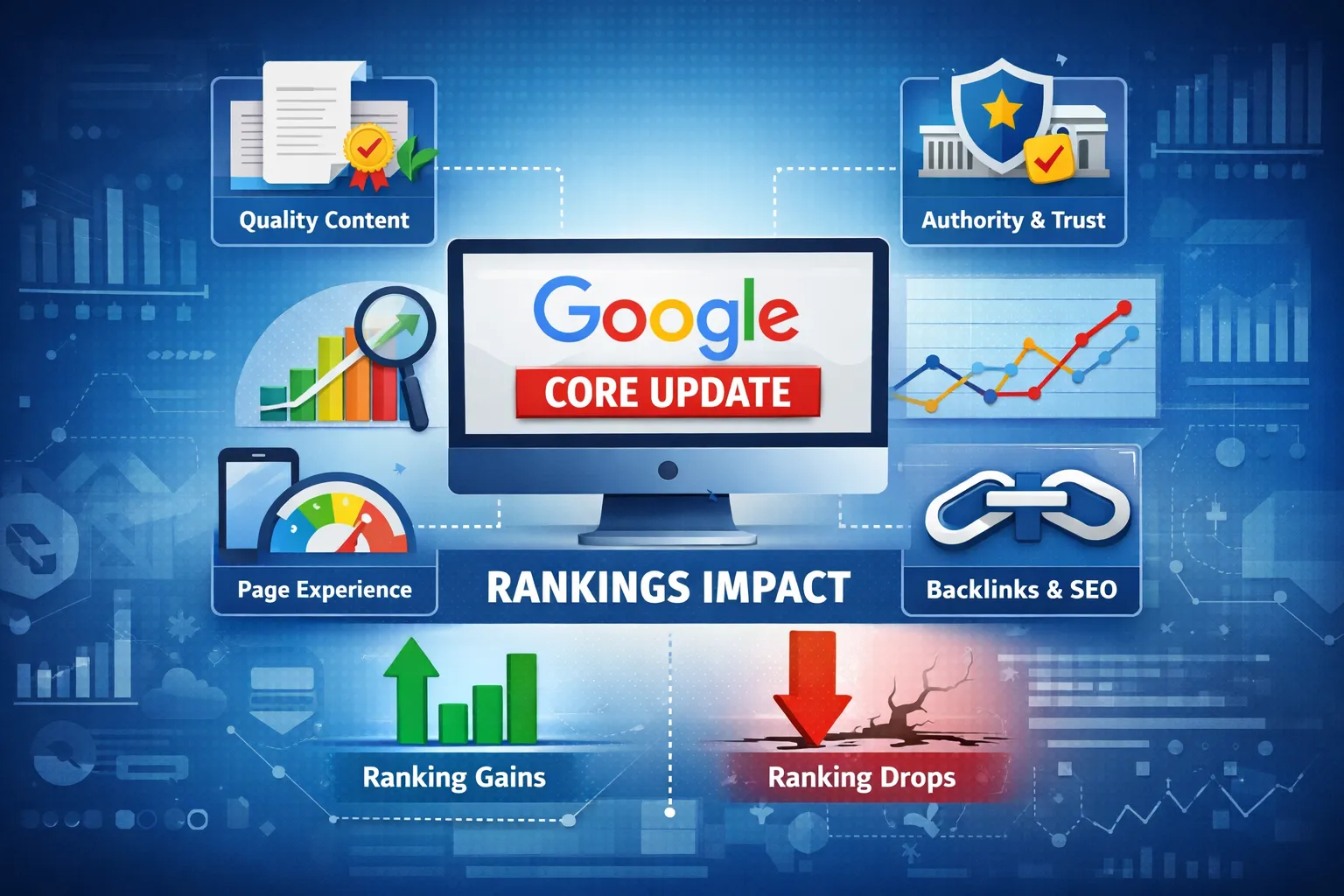
The update emphasizes user experience and content quality. Key ranking factors include:
- Content Quality: In-depth, original content with proper keyword coverage.
- Page Experience: Core Web Vitals, mobile-friendliness, safe browsing, and HTTPS.
- Authority & Backlinks: High-quality backlinks remain a critical ranking factor. Tools like Ahrefs and Moz Link Explorer help audit link profiles.
- User Engagement: Bounce rate, dwell time, and CTR from SERPs influence rankings.
SEO Strategies to Adapt
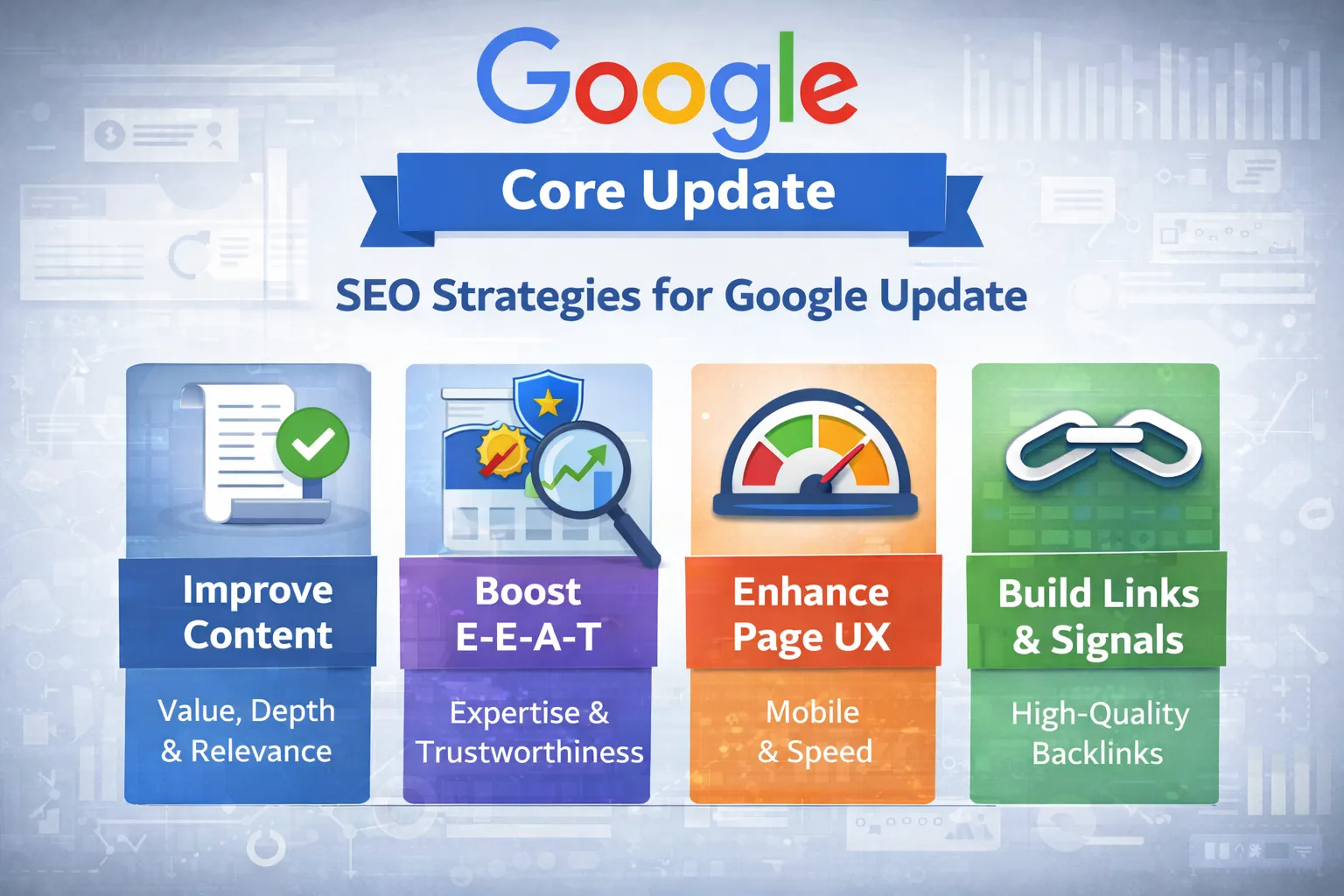
To recover or maintain rankings, implement these strategies:
1. Content Optimization
- Update existing content with fresh, accurate information
- Include structured data and rich snippets
- Improve readability and add internal links
2. Technical SEO Audit
Run comprehensive technical audits using:
- Screaming Frog SEO Spider
- SEMrush Site Audit
- Fix crawl errors, duplicate content, and canonical issues
3. Backlink Analysis & Cleanup
- Disavow toxic backlinks using Google Disavow Tool
- Focus on acquiring high-quality, relevant backlinks
4. Improve User Experience
- Optimize Core Web Vitals (LCP, CLS, FID)
- Enhance mobile responsiveness
- Improve navigation and page speed
Monitoring & Analytics Tools
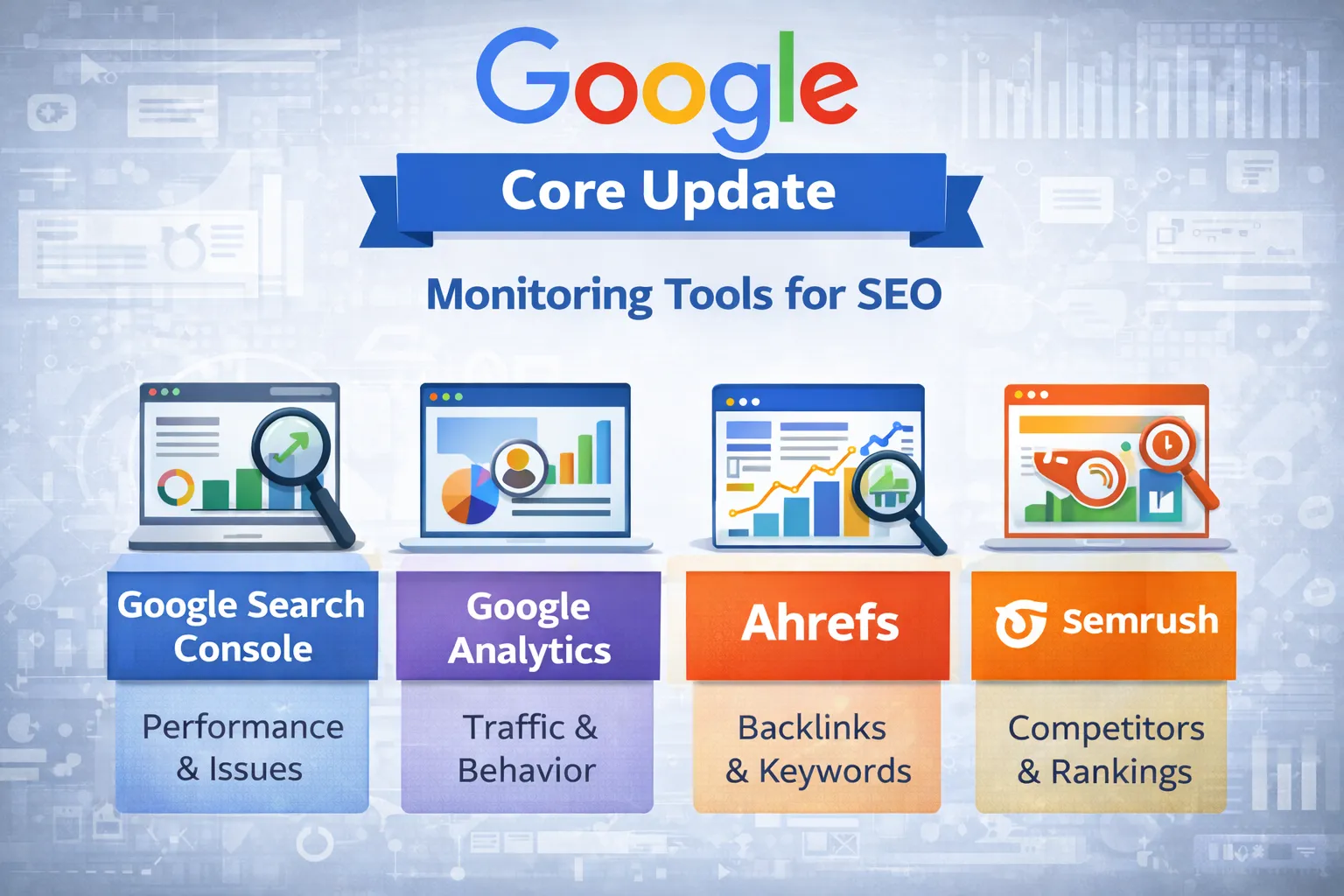
Tracking performance post-update is crucial. Recommended tools:
- Google Analytics — Monitor traffic and user behavior
- Google Search Console — Detect indexing and crawl issues
- Ahrefs — Track keyword rankings and backlinks
- SEMrush — Audit site health and competitive analysis
Case Studies & Examples
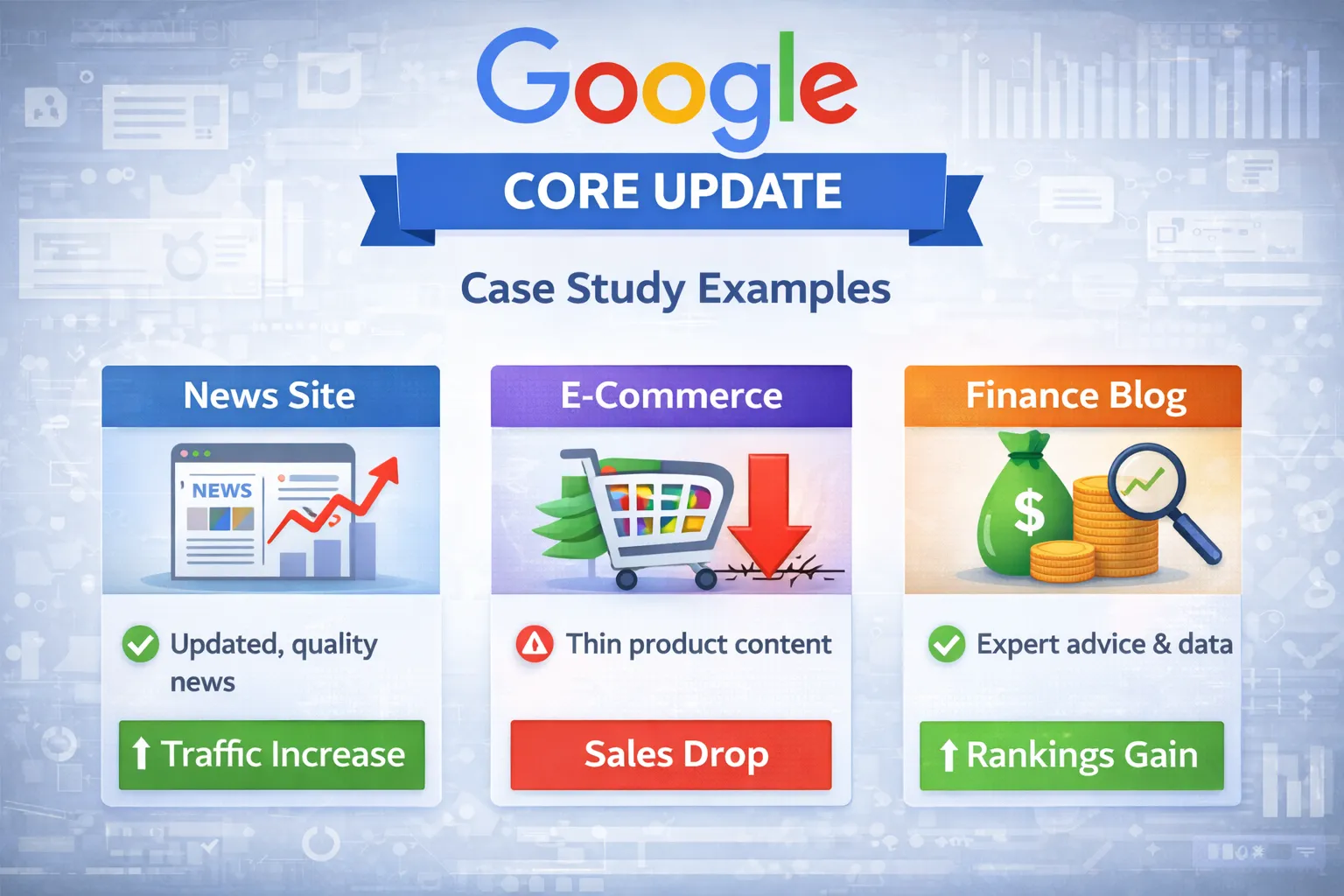
Here are practical examples of sites impacted by Google updates:
1. Health Blog
Before update: Ranking #5 for "healthy eating tips". After update: Dropped to #12. Strategy: Added expert-reviewed content, updated references, internal linking. Recovery: Back to #4 in 3 weeks.
2. E-commerce Store
Before update: Moderate traffic, thin product descriptions. After update: Traffic dropped by 20%. Strategy: Enriched product content, improved images, added FAQs. Recovery: Traffic restored in 2 months.
Common Mistakes to Avoid
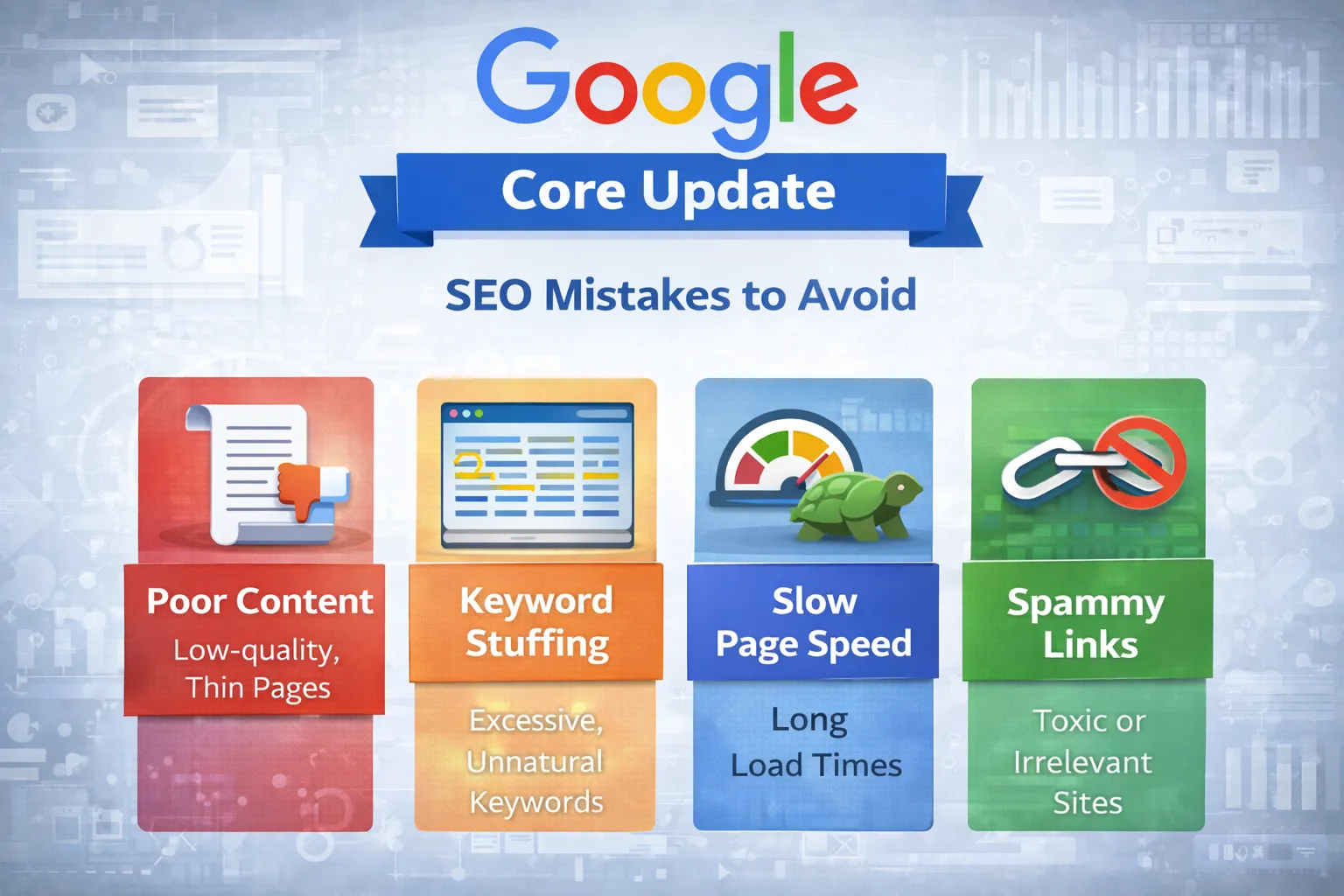
- Ignoring content updates and relying solely on backlinks
- Poor mobile optimization and slow page speed
- Duplicate content across multiple pages
- Neglecting analytics and monitoring post-update
- Acquiring low-quality or spammy backlinks
Frequently Asked Questions (FAQ) About Google Updates
- Q: What is a Google core update?
A: A Google core update is a broad algorithm change designed to improve search result relevance and content quality across the web. - Q: How often does Google release core updates?
A: Google typically releases several core updates per year, along with thousands of smaller algorithm changes. - Q: How do I know if my website is affected by a Google update?
A: Check ranking drops, traffic changes in Google Analytics, and performance reports in Google Search Console. - Q: How long does a Google update take to fully roll out?
A: Most core updates roll out over 1–2 weeks, though ranking volatility may continue afterward. - Q: How long before rankings stabilize after an update?
A: Rankings typically stabilize within 2–6 weeks after the rollout completes. - Q: Should I panic if my traffic drops after an update?
A: No. First analyze affected pages, content quality, backlinks, and user experience before making changes. - Q: Can Google updates be reversed?
A: No. Google does not roll back updates; recovery comes from improving site quality and relevance. - Q: What types of websites are most affected by Google updates?
A: Content-heavy sites, affiliate blogs, YMYL websites, and sites with thin or outdated content. - Q: Do Google updates target specific niches?
A: Updates are broad, but some industries may see stronger impact depending on content quality standards. - Q: What is E-E-A-T and why does it matter after updates?
A: E-E-A-T evaluates Experience, Expertise, Authority, and Trust, which strongly influence rankings. - Q: Does Google penalize websites during updates?
A: No direct penalties—updates re-evaluate content relevance rather than applying manual actions. - Q: Can thin content cause ranking drops?
A: Yes. Pages with shallow, repetitive, or low-value content often lose visibility after updates. - Q: Do backlinks still matter after Google updates?
A: Yes, but quality and relevance matter far more than quantity. - Q: Can spammy backlinks hurt rankings during updates?
A: Yes. Toxic or irrelevant backlinks can negatively affect trust and authority signals. - Q: Should I disavow links after a ranking drop?
A: Only disavow links if they are clearly toxic or manipulative; unnecessary disavows can harm SEO. - Q: Does page speed affect rankings after updates?
A: Yes. Core Web Vitals and page performance are important ranking signals. - Q: How important is mobile optimization after updates?
A: Extremely important, as Google uses mobile-first indexing. - Q: Can improving content help recover rankings?
A: Yes. Updating content with depth, accuracy, and freshness is the most effective recovery strategy. - Q: Should I delete low-performing pages after an update?
A: Consider improving, merging, or removing pages that provide little value. - Q: Do internal links help during recovery?
A: Yes. Strong internal linking improves crawlability and topical relevance. - Q: Does user engagement affect post-update rankings?
A: Indirectly. Better engagement signals often correlate with higher-quality content. - Q: Can schema markup help during Google updates?
A: Schema improves clarity and eligibility for rich results but does not directly boost rankings. - Q: Are AI-generated articles affected by Google updates?
A: Google evaluates content quality, not how it’s created—low-quality AI content may lose rankings. - Q: How do I track the impact of a Google update?
A: Monitor Google Search Console performance, keyword rankings, and analytics trends. - Q: Should I wait before making changes after an update?
A: Yes. Wait until the rollout finishes before making major SEO changes. - Q: Can small websites recover from Google updates?
A: Yes. High-quality, focused content often allows small sites to recover or even gain visibility. - Q: Do content updates need expert authorship?
A: For YMYL topics, expert authorship and citations significantly improve trust. - Q: Does duplicate content cause update-related drops?
A: Yes. Duplicate or near-duplicate content reduces ranking potential. - Q: Can Google updates improve rankings too?
A: Yes. Sites with strong content, UX, and authority often see ranking gains. - Q: How often should I update content after Google updates?
A: Regularly—especially for evergreen and high-traffic pages. - Q: Is long-term SEO better than short-term fixes after updates?
A: Yes. Sustainable SEO practices deliver consistent results across algorithm changes. - Q: What is the best recovery strategy after a Google update?
A: Improve content depth, user experience, technical SEO, and trust signals holistically. - Q: Can Google updates future-proof good websites?
A: Yes. Sites focused on users rather than shortcuts are more resilient long-term.
Conclusion
Google core updates are not penalties—they are recalibrations designed to reward websites that consistently deliver high-quality, helpful, and trustworthy content. Each update refines how Google understands user intent, evaluates expertise, and measures overall page value. Sites that lose visibility are not being punished; they are being outperformed by content that better satisfies searcher needs.
The most reliable way to withstand and recover from Google updates is to adopt a long-term, user-first SEO strategy. This includes creating in-depth and original content, improving page experience across all devices, strengthening internal linking, and maintaining a clean, authoritative backlink profile. Short-term tactics and reactive changes rarely work—sustainable improvements do.
Regular performance monitoring using tools like Google Search Console and analytics platforms allows you to identify affected pages early, understand ranking patterns, and prioritize improvements intelligently. Updating outdated content, consolidating thin pages, enhancing expertise signals, and improving Core Web Vitals can collectively restore and even improve rankings over time.
Ultimately, Google updates favor websites that demonstrate expertise, authority, and trust while providing real value to users. By focusing on quality over quantity, experience over manipulation, and strategy over shortcuts, your website can not only survive algorithm changes but benefit from them in the long run. Use this guide as a framework to adapt confidently, build resilience, and future-proof your SEO efforts.